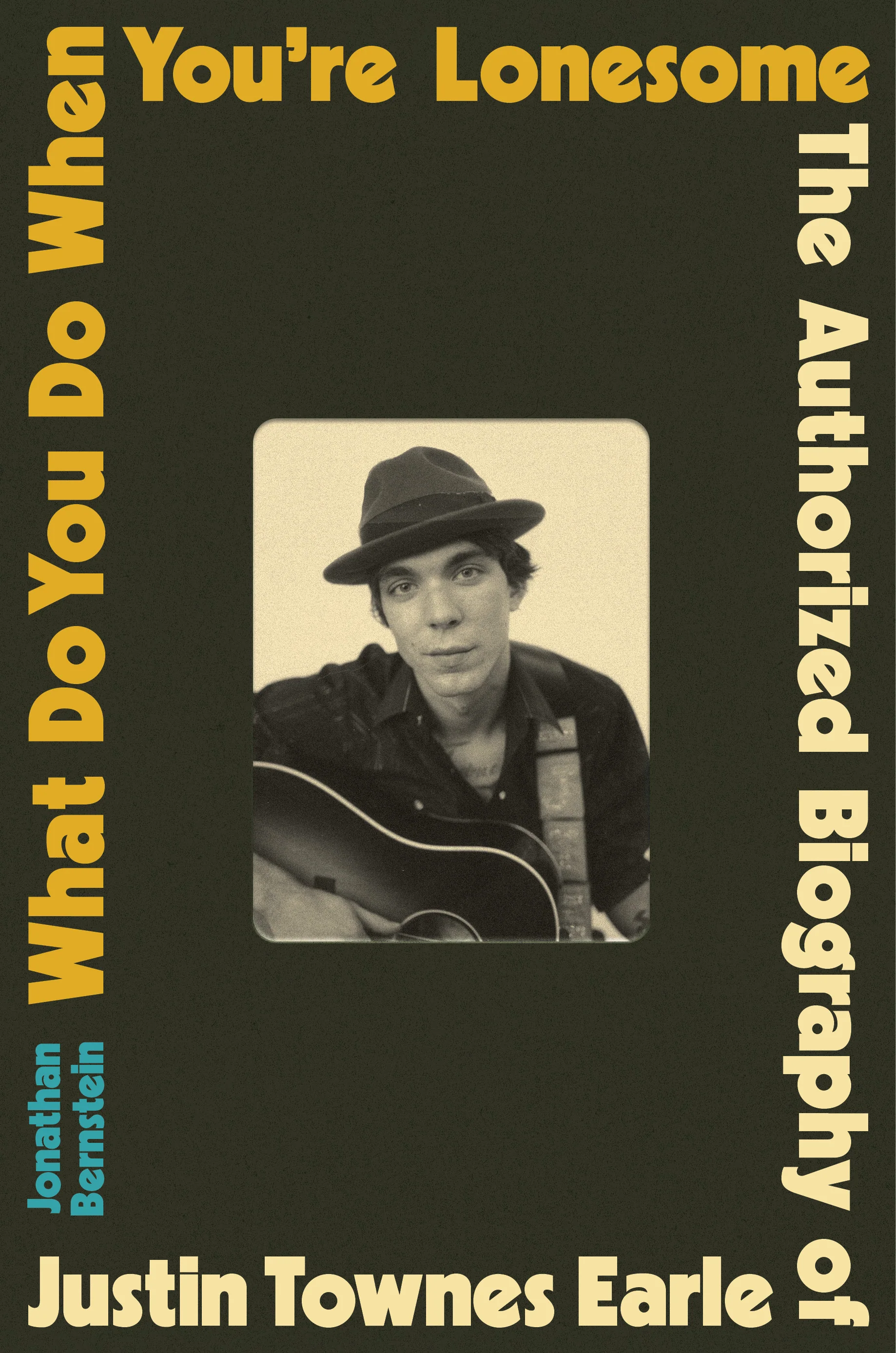
What Do You Do When You’re Lonesome: The Authorized Biography of Justin Townes Earle
When Justin Townes Earle died in 2020 at just 38, alone in a sparsely furnished Nashville apartment, the news sent shockwaves through the country-Americana community. The son of alt-country icon Steve Earle—named in part for Texas troubadour Townes Van Zandt—Justin had long battled mental illness and addiction. Many feared this outcome, yet everyone hoped he would overcome his demons. His life included long stretches of sobriety and commitment to recovery, particularly in the years surrounding his career-defining 2010 album Harlem River Blues, a masterful blend of rambling folk-blues and Southern gospel. His songs captured the grit of cramped Brooklyn apartments, the ache of hangovers, the weight of economic anxiety, and the rootless wandering of his youth in Nashville. He built a reputation as a singular guitar stylist and storyteller, appeared on Letterman, was named one of GQ’s “25 Most Stylish Men in the World,” and released eight albums that formed a powerful and original body of work.
In What Do You Do When You’re Lonesome, Rolling Stone journalist Jonathan Bernstein—working with the full cooperation of the Justin Townes Earle estate—chronicles this brilliant yet troubled life. The book reveals the stories behind Justin’s most beloved songs (“Mama’s Eyes,” “White Gardenias”), traces the unraveling that followed, and explores the shadow world of Nashville’s second-generation musicians navigating their parents’ towering legacies. Bernstein follows Justin’s near-stardom, his moments of clarity and renewal, his marriage to Jenn Marie Earle, and the birth of their daughter, even as he remained haunted by what he called “the myth”: the belief that suffering is essential to art. Heartbreaking and deeply researched, this is an exemplary music biography—an illuminating portrait of talent, trauma, and the heavy cost of the troubadour’s path.
Original: $40.01
-70%$40.01
$12.00What Do You Do When You’re Lonesome: The Authorized Biography of Justin Townes Earle
When Justin Townes Earle died in 2020 at just 38, alone in a sparsely furnished Nashville apartment, the news sent shockwaves through the country-Americana community. The son of alt-country icon Steve Earle—named in part for Texas troubadour Townes Van Zandt—Justin had long battled mental illness and addiction. Many feared this outcome, yet everyone hoped he would overcome his demons. His life included long stretches of sobriety and commitment to recovery, particularly in the years surrounding his career-defining 2010 album Harlem River Blues, a masterful blend of rambling folk-blues and Southern gospel. His songs captured the grit of cramped Brooklyn apartments, the ache of hangovers, the weight of economic anxiety, and the rootless wandering of his youth in Nashville. He built a reputation as a singular guitar stylist and storyteller, appeared on Letterman, was named one of GQ’s “25 Most Stylish Men in the World,” and released eight albums that formed a powerful and original body of work.
In What Do You Do When You’re Lonesome, Rolling Stone journalist Jonathan Bernstein—working with the full cooperation of the Justin Townes Earle estate—chronicles this brilliant yet troubled life. The book reveals the stories behind Justin’s most beloved songs (“Mama’s Eyes,” “White Gardenias”), traces the unraveling that followed, and explores the shadow world of Nashville’s second-generation musicians navigating their parents’ towering legacies. Bernstein follows Justin’s near-stardom, his moments of clarity and renewal, his marriage to Jenn Marie Earle, and the birth of their daughter, even as he remained haunted by what he called “the myth”: the belief that suffering is essential to art. Heartbreaking and deeply researched, this is an exemplary music biography—an illuminating portrait of talent, trauma, and the heavy cost of the troubadour’s path.
Product Information
Product Information
Shipping & Returns
Shipping & Returns
Description
When Justin Townes Earle died in 2020 at just 38, alone in a sparsely furnished Nashville apartment, the news sent shockwaves through the country-Americana community. The son of alt-country icon Steve Earle—named in part for Texas troubadour Townes Van Zandt—Justin had long battled mental illness and addiction. Many feared this outcome, yet everyone hoped he would overcome his demons. His life included long stretches of sobriety and commitment to recovery, particularly in the years surrounding his career-defining 2010 album Harlem River Blues, a masterful blend of rambling folk-blues and Southern gospel. His songs captured the grit of cramped Brooklyn apartments, the ache of hangovers, the weight of economic anxiety, and the rootless wandering of his youth in Nashville. He built a reputation as a singular guitar stylist and storyteller, appeared on Letterman, was named one of GQ’s “25 Most Stylish Men in the World,” and released eight albums that formed a powerful and original body of work.
In What Do You Do When You’re Lonesome, Rolling Stone journalist Jonathan Bernstein—working with the full cooperation of the Justin Townes Earle estate—chronicles this brilliant yet troubled life. The book reveals the stories behind Justin’s most beloved songs (“Mama’s Eyes,” “White Gardenias”), traces the unraveling that followed, and explores the shadow world of Nashville’s second-generation musicians navigating their parents’ towering legacies. Bernstein follows Justin’s near-stardom, his moments of clarity and renewal, his marriage to Jenn Marie Earle, and the birth of their daughter, even as he remained haunted by what he called “the myth”: the belief that suffering is essential to art. Heartbreaking and deeply researched, this is an exemplary music biography—an illuminating portrait of talent, trauma, and the heavy cost of the troubadour’s path.