Upgrade and Afterlife
Drag City present an awesome new vinyl pressing of Gastr del Sol’s Upgrade and Afterlife, just in time for its 29th anniversary.
Way back when, Upgrade and Afterlife was the umpteenth release from the individual and collective forces of David Grubbs (known then for Bastro, The Red Krayola, Codeine, Squirrel Bait) and Jim O’Rourke, whose further history has since numbered at least another umpteen or so essential listens.
As part of its time-traveling function, Upgrade and Afterlife is a return to roots, but not always necessarily Gastr’s. They were more than happy to stand on branches up above other folks in order to see any next thing worth leaping for.
Opening at their most incandescently impressionistic, ‘Our Exquisite Replica of “Eternity”’ has no precedent in the Gastrlog, and few in most others, either. ‘Rebecca Sylvester’ uses vocal harmonies to sharpen their singular, gamelan tone poem song form into something resembling a pop reverie at the finish. With undeniable (albeit oblique) comedy, ‘The Sea Incertain’ comments upon Crookt, Crackt, or Fly’s ‘The C in Cake’, with the presence of cracked electronics here and elsewhere taking a more forward position.
The stentorian chamber piano sound introduced on ‘Mirror Repair’ is still in full effect throughout Upgrade and Afterlife, but the bluesy rattling of finger style acoustic has the last word, with a tranced-out reading of John Fahey’s version of ‘Dry Bones In The Valley’, weaving guitar, piano and Tony Conrad’s trademark droning violin together to close the proceedings with an ingenious, slow-acting bang.
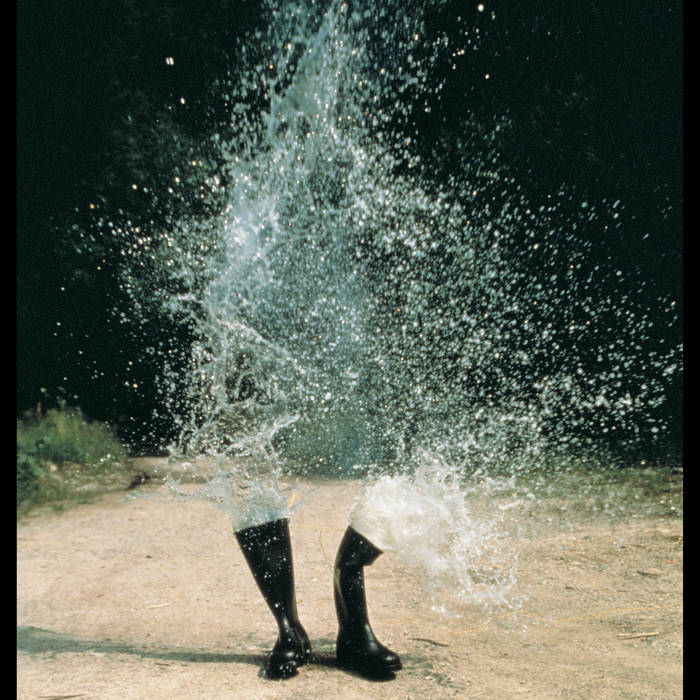
In addition to Tony Conrad, Gastr del Sol drew upon a memorable spectrum of players for the sounds of Upgrade and Afterlife, including Anthony Burr, Steve Braack, Gene Coleman, Mats Gustafsson, Terri Kapsalis, John McEntire, Günter Müller, Jerry Ruthrauff, Ralf Wehowsky and Sue Wolf. When issued, this combination of players, parts and play - packaged in an impressively broad tip-on Stoughton gatefold sleeve emblazoned with Roman Signer’s instantly iconic ‘Wasserstiefel’ image - became the fastest-moving Gastr del Sol record to date.
A delightful result, to our way of thinking, of the band’s ability to push at the far boundaries of their music while consolidating upon pleasure points within sounds and songs. Gastr used these polarities to compulsively draw the listener intimately close with sudden injections of g-force and an uncanny interpolation of space.
Original: $60.01
-70%$60.01
$18.00Upgrade and Afterlife
Drag City present an awesome new vinyl pressing of Gastr del Sol’s Upgrade and Afterlife, just in time for its 29th anniversary.
Way back when, Upgrade and Afterlife was the umpteenth release from the individual and collective forces of David Grubbs (known then for Bastro, The Red Krayola, Codeine, Squirrel Bait) and Jim O’Rourke, whose further history has since numbered at least another umpteen or so essential listens.
As part of its time-traveling function, Upgrade and Afterlife is a return to roots, but not always necessarily Gastr’s. They were more than happy to stand on branches up above other folks in order to see any next thing worth leaping for.
Opening at their most incandescently impressionistic, ‘Our Exquisite Replica of “Eternity”’ has no precedent in the Gastrlog, and few in most others, either. ‘Rebecca Sylvester’ uses vocal harmonies to sharpen their singular, gamelan tone poem song form into something resembling a pop reverie at the finish. With undeniable (albeit oblique) comedy, ‘The Sea Incertain’ comments upon Crookt, Crackt, or Fly’s ‘The C in Cake’, with the presence of cracked electronics here and elsewhere taking a more forward position.
The stentorian chamber piano sound introduced on ‘Mirror Repair’ is still in full effect throughout Upgrade and Afterlife, but the bluesy rattling of finger style acoustic has the last word, with a tranced-out reading of John Fahey’s version of ‘Dry Bones In The Valley’, weaving guitar, piano and Tony Conrad’s trademark droning violin together to close the proceedings with an ingenious, slow-acting bang.
In addition to Tony Conrad, Gastr del Sol drew upon a memorable spectrum of players for the sounds of Upgrade and Afterlife, including Anthony Burr, Steve Braack, Gene Coleman, Mats Gustafsson, Terri Kapsalis, John McEntire, Günter Müller, Jerry Ruthrauff, Ralf Wehowsky and Sue Wolf. When issued, this combination of players, parts and play - packaged in an impressively broad tip-on Stoughton gatefold sleeve emblazoned with Roman Signer’s instantly iconic ‘Wasserstiefel’ image - became the fastest-moving Gastr del Sol record to date.
A delightful result, to our way of thinking, of the band’s ability to push at the far boundaries of their music while consolidating upon pleasure points within sounds and songs. Gastr used these polarities to compulsively draw the listener intimately close with sudden injections of g-force and an uncanny interpolation of space.
Product Information
Product Information
Shipping & Returns
Shipping & Returns
Description
Drag City present an awesome new vinyl pressing of Gastr del Sol’s Upgrade and Afterlife, just in time for its 29th anniversary.
Way back when, Upgrade and Afterlife was the umpteenth release from the individual and collective forces of David Grubbs (known then for Bastro, The Red Krayola, Codeine, Squirrel Bait) and Jim O’Rourke, whose further history has since numbered at least another umpteen or so essential listens.
As part of its time-traveling function, Upgrade and Afterlife is a return to roots, but not always necessarily Gastr’s. They were more than happy to stand on branches up above other folks in order to see any next thing worth leaping for.
Opening at their most incandescently impressionistic, ‘Our Exquisite Replica of “Eternity”’ has no precedent in the Gastrlog, and few in most others, either. ‘Rebecca Sylvester’ uses vocal harmonies to sharpen their singular, gamelan tone poem song form into something resembling a pop reverie at the finish. With undeniable (albeit oblique) comedy, ‘The Sea Incertain’ comments upon Crookt, Crackt, or Fly’s ‘The C in Cake’, with the presence of cracked electronics here and elsewhere taking a more forward position.
The stentorian chamber piano sound introduced on ‘Mirror Repair’ is still in full effect throughout Upgrade and Afterlife, but the bluesy rattling of finger style acoustic has the last word, with a tranced-out reading of John Fahey’s version of ‘Dry Bones In The Valley’, weaving guitar, piano and Tony Conrad’s trademark droning violin together to close the proceedings with an ingenious, slow-acting bang.
In addition to Tony Conrad, Gastr del Sol drew upon a memorable spectrum of players for the sounds of Upgrade and Afterlife, including Anthony Burr, Steve Braack, Gene Coleman, Mats Gustafsson, Terri Kapsalis, John McEntire, Günter Müller, Jerry Ruthrauff, Ralf Wehowsky and Sue Wolf. When issued, this combination of players, parts and play - packaged in an impressively broad tip-on Stoughton gatefold sleeve emblazoned with Roman Signer’s instantly iconic ‘Wasserstiefel’ image - became the fastest-moving Gastr del Sol record to date.
A delightful result, to our way of thinking, of the band’s ability to push at the far boundaries of their music while consolidating upon pleasure points within sounds and songs. Gastr used these polarities to compulsively draw the listener intimately close with sudden injections of g-force and an uncanny interpolation of space.