Unmodern
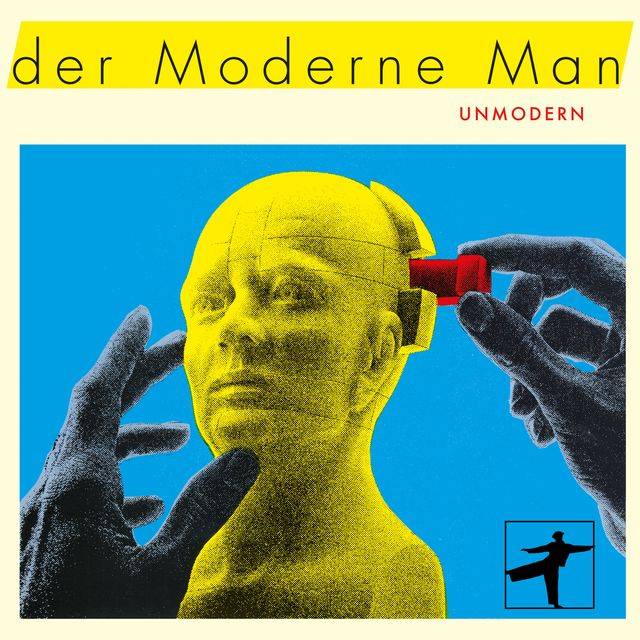
The Hanoverian post-punk group Der Moderne Man made a splash with the 1980 release of their first album “80 Tage auf See” (80 Days at Sea). The album quickly drew attention throughout Germany, later also in the UK and other international territories - not least thanks to the support of BBC’s John Peel. The following months saw concerts in Amsterdam and Vienna, a tour organized by then-label No Fun, several line-up changes on vocals and bass, two EPs and several studio visits. The second LP “Unmodern” was released in 1982. Tapete Records is re-issuing the first two studio albums in March 2025. This is accompanied by "Jugend Forscht", a compilation of demos, EPs and singles with some unreleased tracks. All three releases are complemented by detailed liner notes and previously unreleased images. Although “Unmodern” is still the album of a bunch of amateurishly posing musicians demonstrating self-empowerment, alongside the simple arrangements, statements and songs that repeatedly define POP in three capital letters, it jangles and twinkles in every nook and cranny, and not just like that, but well thought out and in the same way that New Wave was defined and produced in the UK. The topics that “Unmodern” tackles have aged surprisingly well. I have to put it this way because it sounds good, but you could just as well say that they are quite conservative. Or you could tone it down and say that you must understand it in the context of the times. Abwärts were afraid of the computer state, Der Moderne Man criticizes the fact that robots are now making music. With “Nur Die”, it's not entirely clear which language is being referred to. It could be German. “Anakonda” and “Blaue Matrosen” provoke with a proximity to the exoticism of the 1940s and 1950s: here, ‘the faraway’ invariably is a somewhat ridiculous world, and the songs do not clearly distinguish themselves from this part of German non-culture. All of this was justified against the backdrop of the hippie dogmatism of the 1970s, but as I said, it can often only be understood in the context of the times. In any case, Der Moderne Man achieved something here that hardly anyone else in Germany would have managed at the time, except perhaps Fehlfarben. A cutting edge production of international standard. New Wave without caricaturing New Wave. “Blaue Matrosen” was released around the same time as “Enola Gay” without being left behind or anyone turning up their nose and saying something like “Oh, the Germans are trying their hand at New Wave now too.” Hats off to that.
Unmodern
The Hanoverian post-punk group Der Moderne Man made a splash with the 1980 release of their first album “80 Tage auf See” (80 Days at Sea). The album quickly drew attention throughout Germany, later also in the UK and other international territories - not least thanks to the support of BBC’s John Peel. The following months saw concerts in Amsterdam and Vienna, a tour organized by then-label No Fun, several line-up changes on vocals and bass, two EPs and several studio visits. The second LP “Unmodern” was released in 1982. Tapete Records is re-issuing the first two studio albums in March 2025. This is accompanied by "Jugend Forscht", a compilation of demos, EPs and singles with some unreleased tracks. All three releases are complemented by detailed liner notes and previously unreleased images. Although “Unmodern” is still the album of a bunch of amateurishly posing musicians demonstrating self-empowerment, alongside the simple arrangements, statements and songs that repeatedly define POP in three capital letters, it jangles and twinkles in every nook and cranny, and not just like that, but well thought out and in the same way that New Wave was defined and produced in the UK. The topics that “Unmodern” tackles have aged surprisingly well. I have to put it this way because it sounds good, but you could just as well say that they are quite conservative. Or you could tone it down and say that you must understand it in the context of the times. Abwärts were afraid of the computer state, Der Moderne Man criticizes the fact that robots are now making music. With “Nur Die”, it's not entirely clear which language is being referred to. It could be German. “Anakonda” and “Blaue Matrosen” provoke with a proximity to the exoticism of the 1940s and 1950s: here, ‘the faraway’ invariably is a somewhat ridiculous world, and the songs do not clearly distinguish themselves from this part of German non-culture. All of this was justified against the backdrop of the hippie dogmatism of the 1970s, but as I said, it can often only be understood in the context of the times. In any case, Der Moderne Man achieved something here that hardly anyone else in Germany would have managed at the time, except perhaps Fehlfarben. A cutting edge production of international standard. New Wave without caricaturing New Wave. “Blaue Matrosen” was released around the same time as “Enola Gay” without being left behind or anyone turning up their nose and saying something like “Oh, the Germans are trying their hand at New Wave now too.” Hats off to that.
Product Information
Product Information
Shipping & Returns
Shipping & Returns
Description
The Hanoverian post-punk group Der Moderne Man made a splash with the 1980 release of their first album “80 Tage auf See” (80 Days at Sea). The album quickly drew attention throughout Germany, later also in the UK and other international territories - not least thanks to the support of BBC’s John Peel. The following months saw concerts in Amsterdam and Vienna, a tour organized by then-label No Fun, several line-up changes on vocals and bass, two EPs and several studio visits. The second LP “Unmodern” was released in 1982. Tapete Records is re-issuing the first two studio albums in March 2025. This is accompanied by "Jugend Forscht", a compilation of demos, EPs and singles with some unreleased tracks. All three releases are complemented by detailed liner notes and previously unreleased images. Although “Unmodern” is still the album of a bunch of amateurishly posing musicians demonstrating self-empowerment, alongside the simple arrangements, statements and songs that repeatedly define POP in three capital letters, it jangles and twinkles in every nook and cranny, and not just like that, but well thought out and in the same way that New Wave was defined and produced in the UK. The topics that “Unmodern” tackles have aged surprisingly well. I have to put it this way because it sounds good, but you could just as well say that they are quite conservative. Or you could tone it down and say that you must understand it in the context of the times. Abwärts were afraid of the computer state, Der Moderne Man criticizes the fact that robots are now making music. With “Nur Die”, it's not entirely clear which language is being referred to. It could be German. “Anakonda” and “Blaue Matrosen” provoke with a proximity to the exoticism of the 1940s and 1950s: here, ‘the faraway’ invariably is a somewhat ridiculous world, and the songs do not clearly distinguish themselves from this part of German non-culture. All of this was justified against the backdrop of the hippie dogmatism of the 1970s, but as I said, it can often only be understood in the context of the times. In any case, Der Moderne Man achieved something here that hardly anyone else in Germany would have managed at the time, except perhaps Fehlfarben. A cutting edge production of international standard. New Wave without caricaturing New Wave. “Blaue Matrosen” was released around the same time as “Enola Gay” without being left behind or anyone turning up their nose and saying something like “Oh, the Germans are trying their hand at New Wave now too.” Hats off to that.