Toria Wooff
English folk is about to enter a beguiling new era; tales of the beautifully strange. Singing stories woven of love, loss, hope, and womanhood, Toria Wooff’s self-titled debut album offers an antidote to our demons; a contemporary twist on the Anglo folk which whisper a word to the wise; never judge a book by its cover.
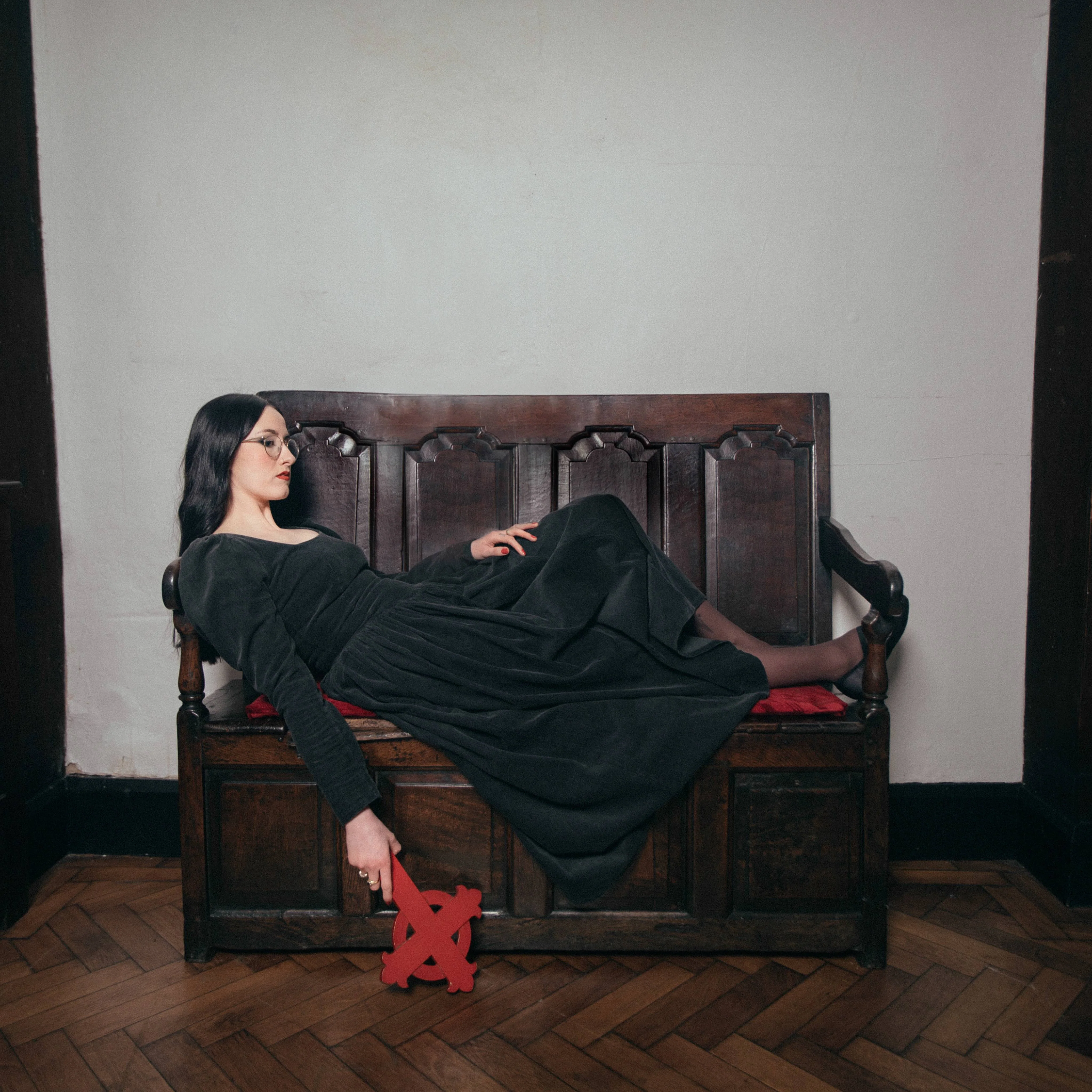
“The self-reflection in the title demonstrates a life lived,” Toria tells. “The songs are chapters to dip in and out of, moments immortalised in time, bound together by nothing more than the human experience.” Like tales of the unexpected lingering in the dewy mist of the Lancashire moors surrounding her hometown, Toria Wooff is anything but linear. With each song written independently of the other, and yet, working together like a compendium of short stories in a well-thumbed cloth-bound novel, hope lies at its heart and buckles under emotional weight like the hefty influence of the gothic literature, ghost stories of English medieval scholar M.R. James, and the British Library’s Tales of the Weird adorning her bookshelves. The artwork even sees Toria herself, lounging across a church pew in the haunted 15th Century Medieval Mansion, Stanley Palace.
Both an exorcism of torment and an invitation to feeling the good, it offers a more palatable pill to swallow. Album opener ‘The Plough’ and imagined ghost story ‘The Waltz of Winter Hey’ explore the physical and metaphysical truth of womanhood, whilst love and commitment eeks through the cracks on reassuringly uplifting ‘That’s What Falling In Love Will Do.’ Elsewhere ‘Song for A’ and ‘Lefty’s Motel Room’ contend with the impact of death, lovingly reviving the spirit of her own MIA partner-in-crime, Alicia. “It's interesting that you can write with more than one meaning,” Toria reflects, “you can take the songs literally or they can mean something entirely different; with some, the truth didn’t occur to me until after they were written.”
Whilst tugging at the cloaks of contemporary folk souls Jake Xerxes Fussell or Richard Dawson, each track also transcends time with roots deeply entwined in the seventies lyrical narratives of Led Zeppelin, Fairport Convention and Townes Van Zandt - treasures Toria first discovered within her dad’s record collection. “I like the story to be the heart of a song and the sound to frame it,” she hints of her own process. Slaving over several guitar takes to dim the brightness of sound after opting for nylon strings, Toria happened upon a quirky block-neck guitar at the back of her local instrument store, handmade by the resident of a neighboring retirement home in the same era; its unusual form possessed a charm luring Toria under its spell. “It became the perfect metaphor for tying the songs together,” she says. “It didn’t belong but made sense; there it was, looking unfit for purpose, waiting to be discovered.”
Recorded with producer and mix engineer James Wyatt, at his Sloe Flower studio in Chester - with the organ recorded in Wales, co-incidentally where Robert Plant wrote IV - the objective was simple; show restraint. With Toria’s reassuring vocals and guitar taking the lead, it is only at the end of ‘Sweet William’ when the band join in, whilst rousing strings on ‘Seeing Things Through’ crescendo at the perfect point through instinct rather than intent – adding its own challenges. “‘Sweet William’ was one of the hardest songs I’ve written and recorded; the fullness at the end feels so warm, it would have been easy to add things and change it up, especially with tracks like The Flood which have been part of me for so long. So, we took everything off and built from there.”
More Images
Toria Wooff
English folk is about to enter a beguiling new era; tales of the beautifully strange. Singing stories woven of love, loss, hope, and womanhood, Toria Wooff’s self-titled debut album offers an antidote to our demons; a contemporary twist on the Anglo folk which whisper a word to the wise; never judge a book by its cover.
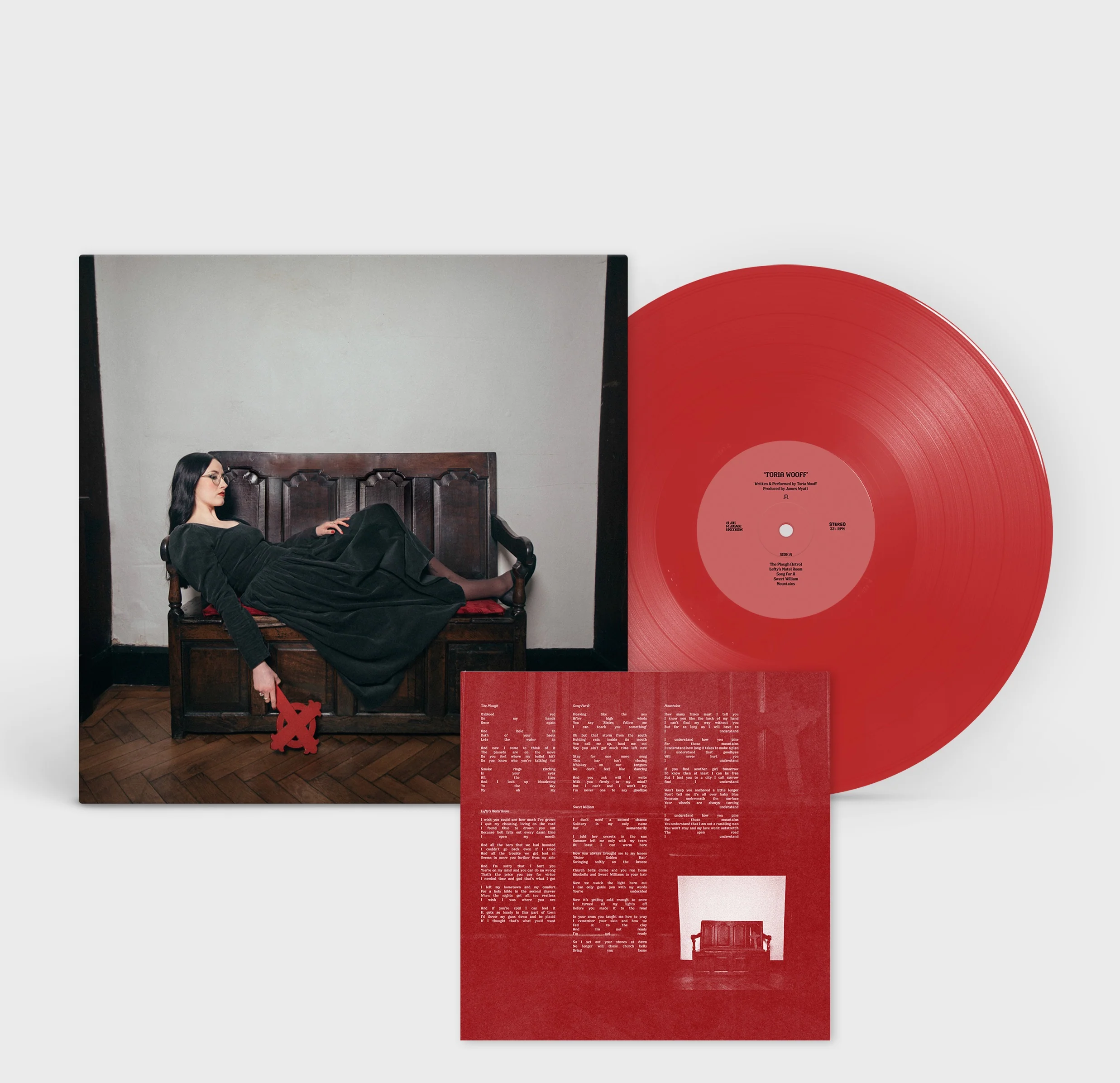
“The self-reflection in the title demonstrates a life lived,” Toria tells. “The songs are chapters to dip in and out of, moments immortalised in time, bound together by nothing more than the human experience.” Like tales of the unexpected lingering in the dewy mist of the Lancashire moors surrounding her hometown, Toria Wooff is anything but linear. With each song written independently of the other, and yet, working together like a compendium of short stories in a well-thumbed cloth-bound novel, hope lies at its heart and buckles under emotional weight like the hefty influence of the gothic literature, ghost stories of English medieval scholar M.R. James, and the British Library’s Tales of the Weird adorning her bookshelves. The artwork even sees Toria herself, lounging across a church pew in the haunted 15th Century Medieval Mansion, Stanley Palace.
Both an exorcism of torment and an invitation to feeling the good, it offers a more palatable pill to swallow. Album opener ‘The Plough’ and imagined ghost story ‘The Waltz of Winter Hey’ explore the physical and metaphysical truth of womanhood, whilst love and commitment eeks through the cracks on reassuringly uplifting ‘That’s What Falling In Love Will Do.’ Elsewhere ‘Song for A’ and ‘Lefty’s Motel Room’ contend with the impact of death, lovingly reviving the spirit of her own MIA partner-in-crime, Alicia. “It's interesting that you can write with more than one meaning,” Toria reflects, “you can take the songs literally or they can mean something entirely different; with some, the truth didn’t occur to me until after they were written.”
Whilst tugging at the cloaks of contemporary folk souls Jake Xerxes Fussell or Richard Dawson, each track also transcends time with roots deeply entwined in the seventies lyrical narratives of Led Zeppelin, Fairport Convention and Townes Van Zandt - treasures Toria first discovered within her dad’s record collection. “I like the story to be the heart of a song and the sound to frame it,” she hints of her own process. Slaving over several guitar takes to dim the brightness of sound after opting for nylon strings, Toria happened upon a quirky block-neck guitar at the back of her local instrument store, handmade by the resident of a neighboring retirement home in the same era; its unusual form possessed a charm luring Toria under its spell. “It became the perfect metaphor for tying the songs together,” she says. “It didn’t belong but made sense; there it was, looking unfit for purpose, waiting to be discovered.”
Recorded with producer and mix engineer James Wyatt, at his Sloe Flower studio in Chester - with the organ recorded in Wales, co-incidentally where Robert Plant wrote IV - the objective was simple; show restraint. With Toria’s reassuring vocals and guitar taking the lead, it is only at the end of ‘Sweet William’ when the band join in, whilst rousing strings on ‘Seeing Things Through’ crescendo at the perfect point through instinct rather than intent – adding its own challenges. “‘Sweet William’ was one of the hardest songs I’ve written and recorded; the fullness at the end feels so warm, it would have been easy to add things and change it up, especially with tracks like The Flood which have been part of me for so long. So, we took everything off and built from there.”
Product Information
Product Information
Shipping & Returns
Shipping & Returns
Description
English folk is about to enter a beguiling new era; tales of the beautifully strange. Singing stories woven of love, loss, hope, and womanhood, Toria Wooff’s self-titled debut album offers an antidote to our demons; a contemporary twist on the Anglo folk which whisper a word to the wise; never judge a book by its cover.
“The self-reflection in the title demonstrates a life lived,” Toria tells. “The songs are chapters to dip in and out of, moments immortalised in time, bound together by nothing more than the human experience.” Like tales of the unexpected lingering in the dewy mist of the Lancashire moors surrounding her hometown, Toria Wooff is anything but linear. With each song written independently of the other, and yet, working together like a compendium of short stories in a well-thumbed cloth-bound novel, hope lies at its heart and buckles under emotional weight like the hefty influence of the gothic literature, ghost stories of English medieval scholar M.R. James, and the British Library’s Tales of the Weird adorning her bookshelves. The artwork even sees Toria herself, lounging across a church pew in the haunted 15th Century Medieval Mansion, Stanley Palace.
Both an exorcism of torment and an invitation to feeling the good, it offers a more palatable pill to swallow. Album opener ‘The Plough’ and imagined ghost story ‘The Waltz of Winter Hey’ explore the physical and metaphysical truth of womanhood, whilst love and commitment eeks through the cracks on reassuringly uplifting ‘That’s What Falling In Love Will Do.’ Elsewhere ‘Song for A’ and ‘Lefty’s Motel Room’ contend with the impact of death, lovingly reviving the spirit of her own MIA partner-in-crime, Alicia. “It's interesting that you can write with more than one meaning,” Toria reflects, “you can take the songs literally or they can mean something entirely different; with some, the truth didn’t occur to me until after they were written.”
Whilst tugging at the cloaks of contemporary folk souls Jake Xerxes Fussell or Richard Dawson, each track also transcends time with roots deeply entwined in the seventies lyrical narratives of Led Zeppelin, Fairport Convention and Townes Van Zandt - treasures Toria first discovered within her dad’s record collection. “I like the story to be the heart of a song and the sound to frame it,” she hints of her own process. Slaving over several guitar takes to dim the brightness of sound after opting for nylon strings, Toria happened upon a quirky block-neck guitar at the back of her local instrument store, handmade by the resident of a neighboring retirement home in the same era; its unusual form possessed a charm luring Toria under its spell. “It became the perfect metaphor for tying the songs together,” she says. “It didn’t belong but made sense; there it was, looking unfit for purpose, waiting to be discovered.”
Recorded with producer and mix engineer James Wyatt, at his Sloe Flower studio in Chester - with the organ recorded in Wales, co-incidentally where Robert Plant wrote IV - the objective was simple; show restraint. With Toria’s reassuring vocals and guitar taking the lead, it is only at the end of ‘Sweet William’ when the band join in, whilst rousing strings on ‘Seeing Things Through’ crescendo at the perfect point through instinct rather than intent – adding its own challenges. “‘Sweet William’ was one of the hardest songs I’ve written and recorded; the fullness at the end feels so warm, it would have been easy to add things and change it up, especially with tracks like The Flood which have been part of me for so long. So, we took everything off and built from there.”