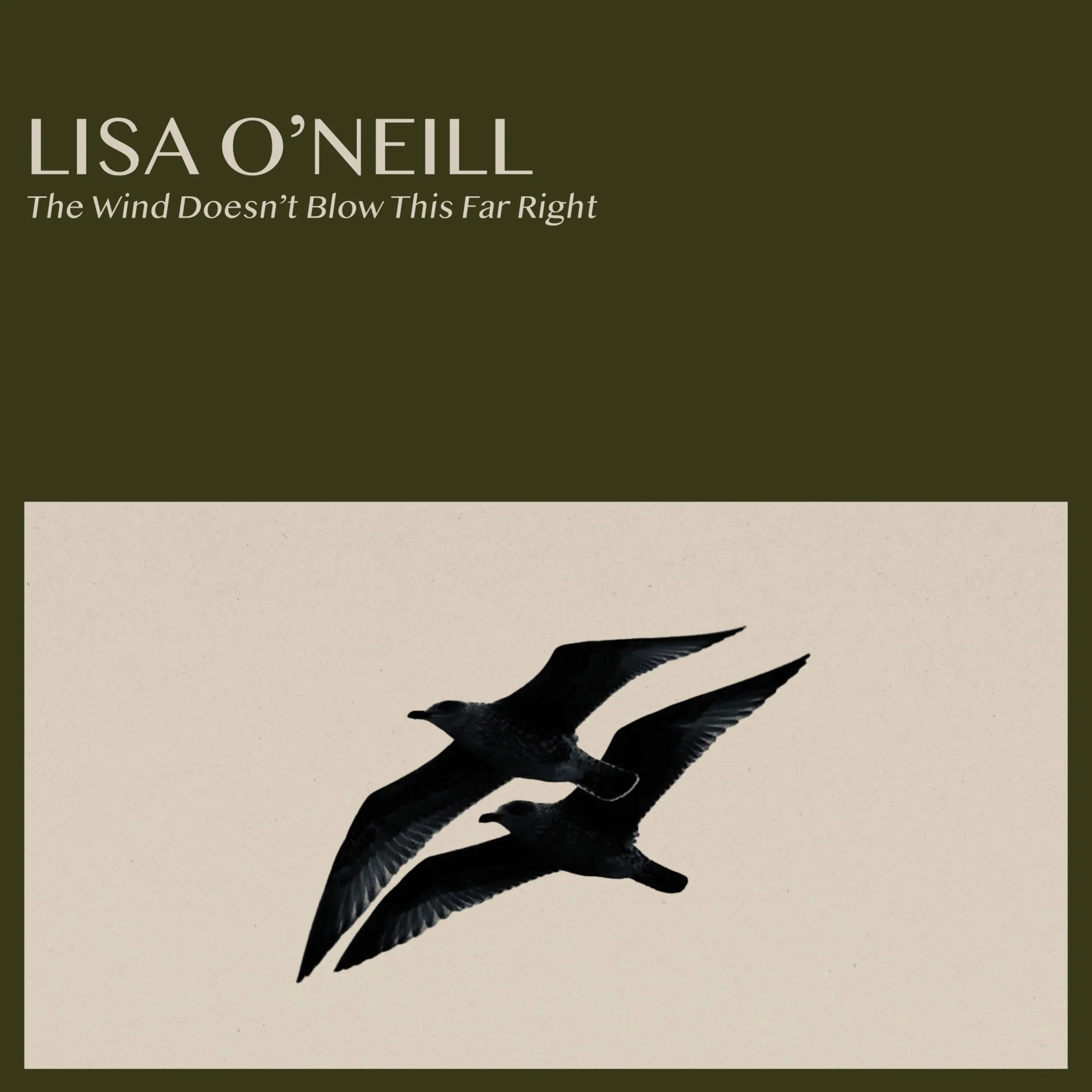
The Wind Doesn't Blow This Far Right
New EP by Cavan songwriter Lisa O’Neill is comprised of a group of six tracks, they include the haunting rendition of Bob Dylan’s ‘All The Tired Horses’ that Lisa recorded to soundtrack the closing scene of the final episode of Peaky Blinders, plus ‘Homeless In The Thousands (Dublin in the Digital Age)’ featuring Peter Doherty, released as a stand-alone single in January of this year.
It was not the first time O’Neill has written about social injustices on the cusp of a change. Songs like ‘Rock the Machine’ about unemployment in the Dublin dock lands, ‘When Cash Was King’ about the move to a cashless society and ‘Violet Gibson’ about the Irish woman who attempted to assassinate Mussolini in 1926 – this new song was written in response to the growing issue of homelessness in Dublin and Ireland. Added to these are a new song and recent live favourite ‘Mother Jones’ about the Irish activist who emigrated to America and became a union organiser, Mary G. Harris Jones, who in 1902 was called ‘the most dangerous woman in America’ - following her organising of miners against mine owners leading directly to the introduction of America’s first child labour laws. The EP is completed with a stunning version of the seasonally topical ‘The Bleak Midwinter’ and a moving reading of the James Stevens poem ‘Autumn 1915’.
Original: $22.66
-70%$22.66
$6.80The Wind Doesn't Blow This Far Right
New EP by Cavan songwriter Lisa O’Neill is comprised of a group of six tracks, they include the haunting rendition of Bob Dylan’s ‘All The Tired Horses’ that Lisa recorded to soundtrack the closing scene of the final episode of Peaky Blinders, plus ‘Homeless In The Thousands (Dublin in the Digital Age)’ featuring Peter Doherty, released as a stand-alone single in January of this year.
It was not the first time O’Neill has written about social injustices on the cusp of a change. Songs like ‘Rock the Machine’ about unemployment in the Dublin dock lands, ‘When Cash Was King’ about the move to a cashless society and ‘Violet Gibson’ about the Irish woman who attempted to assassinate Mussolini in 1926 – this new song was written in response to the growing issue of homelessness in Dublin and Ireland. Added to these are a new song and recent live favourite ‘Mother Jones’ about the Irish activist who emigrated to America and became a union organiser, Mary G. Harris Jones, who in 1902 was called ‘the most dangerous woman in America’ - following her organising of miners against mine owners leading directly to the introduction of America’s first child labour laws. The EP is completed with a stunning version of the seasonally topical ‘The Bleak Midwinter’ and a moving reading of the James Stevens poem ‘Autumn 1915’.
Product Information
Product Information
Shipping & Returns
Shipping & Returns
Description
New EP by Cavan songwriter Lisa O’Neill is comprised of a group of six tracks, they include the haunting rendition of Bob Dylan’s ‘All The Tired Horses’ that Lisa recorded to soundtrack the closing scene of the final episode of Peaky Blinders, plus ‘Homeless In The Thousands (Dublin in the Digital Age)’ featuring Peter Doherty, released as a stand-alone single in January of this year.
It was not the first time O’Neill has written about social injustices on the cusp of a change. Songs like ‘Rock the Machine’ about unemployment in the Dublin dock lands, ‘When Cash Was King’ about the move to a cashless society and ‘Violet Gibson’ about the Irish woman who attempted to assassinate Mussolini in 1926 – this new song was written in response to the growing issue of homelessness in Dublin and Ireland. Added to these are a new song and recent live favourite ‘Mother Jones’ about the Irish activist who emigrated to America and became a union organiser, Mary G. Harris Jones, who in 1902 was called ‘the most dangerous woman in America’ - following her organising of miners against mine owners leading directly to the introduction of America’s first child labour laws. The EP is completed with a stunning version of the seasonally topical ‘The Bleak Midwinter’ and a moving reading of the James Stevens poem ‘Autumn 1915’.