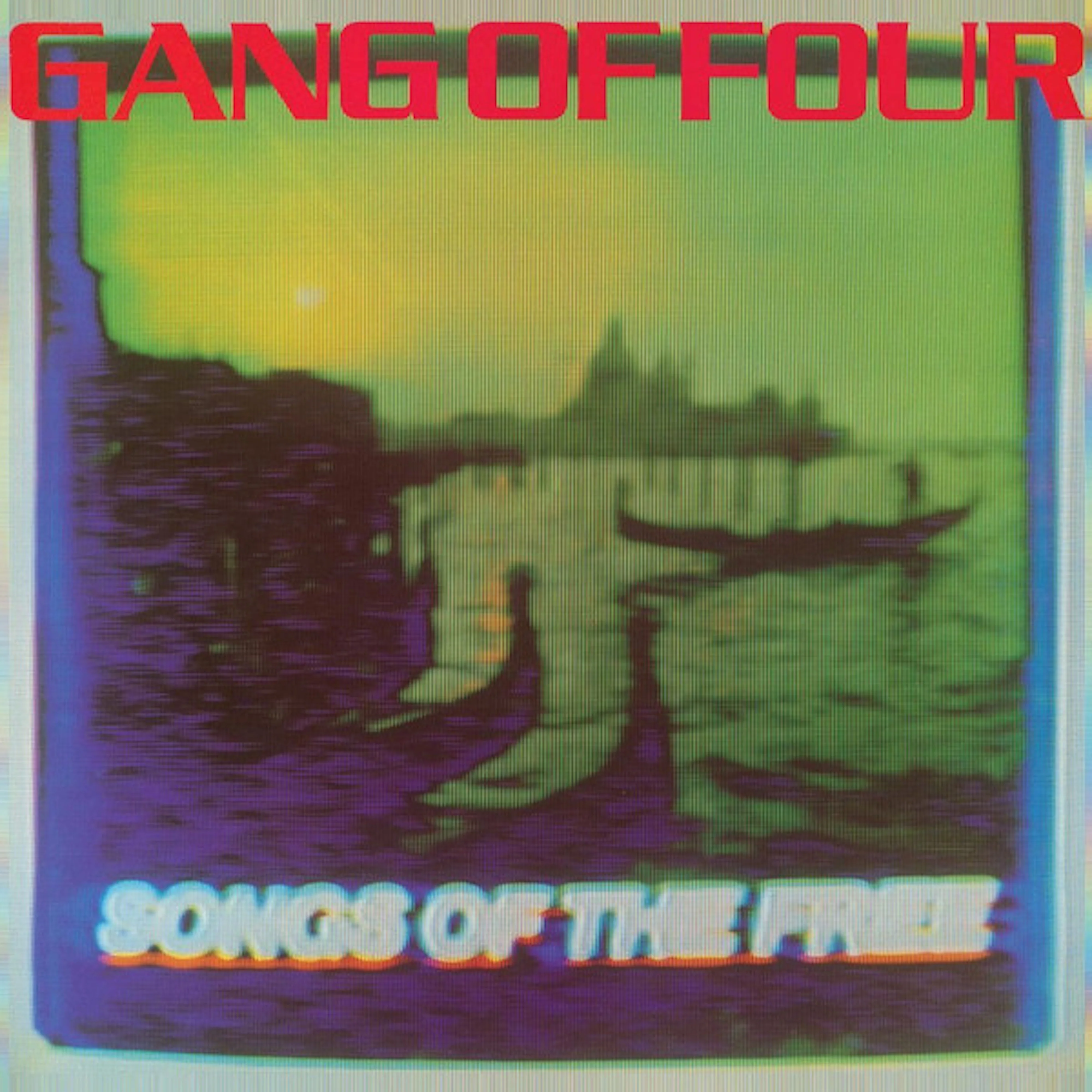
Songs Of The Free
Gang of Four was formed in Leeds in 1976 by bassist Dave Allen, drummer Hugo Burnham, guitarist Andy Gill, and singer Jon King. The band pioneered a style of music that inverted punk’s blunt and explosive energies — favoring tense rhythms, percussive guitars, and lyrics that traded in Marxist theory and situationism. They put every element of the traditional “rock band” format to question, from notions of harmony and rhythm to presentation and performance. With this original lineup, the band released their first two hugely influential albums, ‘Entertainment’ (1979) and ‘Solid Gold’ (1981). Dave Allen departed the band, and Sara Lee joined to record their third album, ‘Songs of the Free’, where her added vocals no doubt helped propel them to a different level. The album includes “Call Me Up”, which is a live favorite, and their biggest “hit” – “I Love A Man In Uniform” which climbed the UK charts until the BBC decided to ban it during the Falklands War, presumably because it might be considered critical to the military. In the US, the song received a lot of airplay, particularly from stations that saw it as a pro-military dance song. The dancefloors saw some action too… The album was recorded at Ridge Farm Studios in Surrey and co-produced by Jon Howlett, whose recent experiences recording bands like OMD and A Flock Of Seagulls may have helped with the album often being referred to as slightly less punk and a touch more new wave.
Original: $44.00
-70%$44.00
$13.20Songs Of The Free
Gang of Four was formed in Leeds in 1976 by bassist Dave Allen, drummer Hugo Burnham, guitarist Andy Gill, and singer Jon King. The band pioneered a style of music that inverted punk’s blunt and explosive energies — favoring tense rhythms, percussive guitars, and lyrics that traded in Marxist theory and situationism. They put every element of the traditional “rock band” format to question, from notions of harmony and rhythm to presentation and performance. With this original lineup, the band released their first two hugely influential albums, ‘Entertainment’ (1979) and ‘Solid Gold’ (1981). Dave Allen departed the band, and Sara Lee joined to record their third album, ‘Songs of the Free’, where her added vocals no doubt helped propel them to a different level. The album includes “Call Me Up”, which is a live favorite, and their biggest “hit” – “I Love A Man In Uniform” which climbed the UK charts until the BBC decided to ban it during the Falklands War, presumably because it might be considered critical to the military. In the US, the song received a lot of airplay, particularly from stations that saw it as a pro-military dance song. The dancefloors saw some action too… The album was recorded at Ridge Farm Studios in Surrey and co-produced by Jon Howlett, whose recent experiences recording bands like OMD and A Flock Of Seagulls may have helped with the album often being referred to as slightly less punk and a touch more new wave.
Product Information
Product Information
Shipping & Returns
Shipping & Returns
Description
Gang of Four was formed in Leeds in 1976 by bassist Dave Allen, drummer Hugo Burnham, guitarist Andy Gill, and singer Jon King. The band pioneered a style of music that inverted punk’s blunt and explosive energies — favoring tense rhythms, percussive guitars, and lyrics that traded in Marxist theory and situationism. They put every element of the traditional “rock band” format to question, from notions of harmony and rhythm to presentation and performance. With this original lineup, the band released their first two hugely influential albums, ‘Entertainment’ (1979) and ‘Solid Gold’ (1981). Dave Allen departed the band, and Sara Lee joined to record their third album, ‘Songs of the Free’, where her added vocals no doubt helped propel them to a different level. The album includes “Call Me Up”, which is a live favorite, and their biggest “hit” – “I Love A Man In Uniform” which climbed the UK charts until the BBC decided to ban it during the Falklands War, presumably because it might be considered critical to the military. In the US, the song received a lot of airplay, particularly from stations that saw it as a pro-military dance song. The dancefloors saw some action too… The album was recorded at Ridge Farm Studios in Surrey and co-produced by Jon Howlett, whose recent experiences recording bands like OMD and A Flock Of Seagulls may have helped with the album often being referred to as slightly less punk and a touch more new wave.