Rising Down
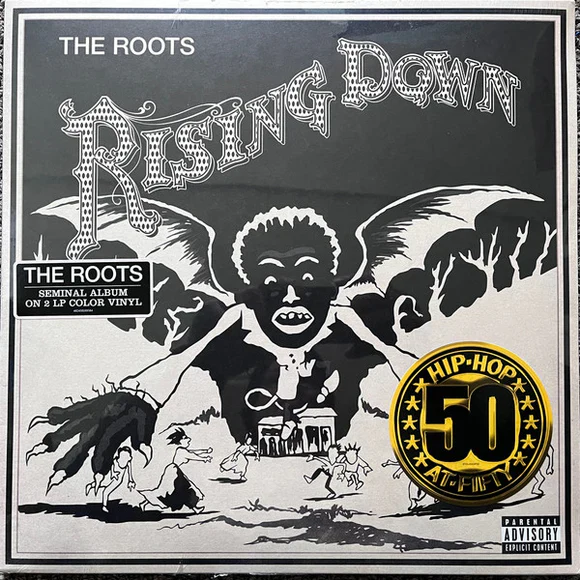
Released in 2008, Rising Down is The Roots’ politically charged tenth studio album, blending hard-hitting hip-hop with live instrumentation and dense, urgent lyricism. Drawing its title from William T. Vollmann’s book Rising Up and Rising Down, the record tackles themes of systemic oppression, environmental decay, war, and social unrest, framed by dark, aggressive beats and razor-sharp wordplay from Black Thought and guests like Mos Def, Common, Talib Kweli, and Styles P. Sonically heavier and more foreboding than its predecessors, the album’s mood mirrors its striking cover art—adapted from an 1898 political cartoonserving as a potent commentary on historical cycles of injustice and the turbulent state of the modern world.
Original: $60.01
-70%$60.01
$18.00Rising Down
Released in 2008, Rising Down is The Roots’ politically charged tenth studio album, blending hard-hitting hip-hop with live instrumentation and dense, urgent lyricism. Drawing its title from William T. Vollmann’s book Rising Up and Rising Down, the record tackles themes of systemic oppression, environmental decay, war, and social unrest, framed by dark, aggressive beats and razor-sharp wordplay from Black Thought and guests like Mos Def, Common, Talib Kweli, and Styles P. Sonically heavier and more foreboding than its predecessors, the album’s mood mirrors its striking cover art—adapted from an 1898 political cartoonserving as a potent commentary on historical cycles of injustice and the turbulent state of the modern world.
Product Information
Product Information
Shipping & Returns
Shipping & Returns
Description
Released in 2008, Rising Down is The Roots’ politically charged tenth studio album, blending hard-hitting hip-hop with live instrumentation and dense, urgent lyricism. Drawing its title from William T. Vollmann’s book Rising Up and Rising Down, the record tackles themes of systemic oppression, environmental decay, war, and social unrest, framed by dark, aggressive beats and razor-sharp wordplay from Black Thought and guests like Mos Def, Common, Talib Kweli, and Styles P. Sonically heavier and more foreboding than its predecessors, the album’s mood mirrors its striking cover art—adapted from an 1898 political cartoonserving as a potent commentary on historical cycles of injustice and the turbulent state of the modern world.