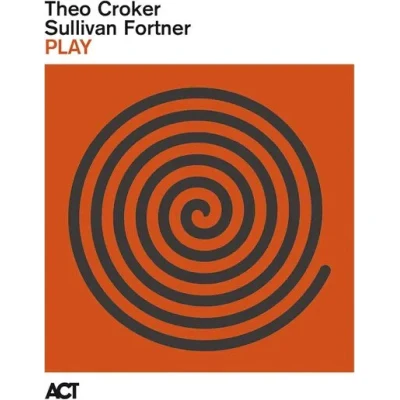
Play
The album Play unites, for the first time, two of the most important American musicians of the current generation charting new paths in jazz and way beyond: trumpeter Theo Croker and pianist Sullivan Fortner. The two have known each other for more than 20 years, but Play is their first recording as joint leaders.
Their original idea was to record a collection of modern jazz standards, perhaps including a few versions of popular songs. So Croker and Fortner went into the studio and made a recording… but then discarded it. In its entirety
Theo Croker remembers: “As we were playing it, it felt very stale. Not in the sense that the songs weren’t any good. But it felt like we were just kind of playing things that had already been recorded many times.” Sullivan Fortner agrees: “We felt it wasn’t really us, it felt more like being in school. We had both played a lot of music from the great American songbook in the past. Those are great songs, they were our vehicle for studying. But it wasn’t necessarily the music we gravitated towards on gigs. We are always rooted in something that is beyond just jazz. The music we create always tends to reflect the entire diaspora of black American music, as opposed to just one solid genre.”
So Croker and Fortner went back into the studio the very next day. The plan this time: No plan. No compositions (except for the opener ‘A Prayer for Peace’). Theo Croker takes up the story: “We would just come up with spontaneous little ideas: This song we’ll play fast. For this song we pick four notes we were NOT gonna play. This song I play long notes, you play fast notes. I’m gonna come up with a melody and we just see where it goes. In just one hour, we were done.” The process might sound simple in theory, but in reality it has captured the essence of two lifetimes of learning and improvisation. Sullivan Fortner says: “It just felt right, it felt like: this is really us. It pulled inspirationally and spiritually and pulled out a lot of the things we have learned together and in common.”
Play
The album Play unites, for the first time, two of the most important American musicians of the current generation charting new paths in jazz and way beyond: trumpeter Theo Croker and pianist Sullivan Fortner. The two have known each other for more than 20 years, but Play is their first recording as joint leaders.
Their original idea was to record a collection of modern jazz standards, perhaps including a few versions of popular songs. So Croker and Fortner went into the studio and made a recording… but then discarded it. In its entirety
Theo Croker remembers: “As we were playing it, it felt very stale. Not in the sense that the songs weren’t any good. But it felt like we were just kind of playing things that had already been recorded many times.” Sullivan Fortner agrees: “We felt it wasn’t really us, it felt more like being in school. We had both played a lot of music from the great American songbook in the past. Those are great songs, they were our vehicle for studying. But it wasn’t necessarily the music we gravitated towards on gigs. We are always rooted in something that is beyond just jazz. The music we create always tends to reflect the entire diaspora of black American music, as opposed to just one solid genre.”
So Croker and Fortner went back into the studio the very next day. The plan this time: No plan. No compositions (except for the opener ‘A Prayer for Peace’). Theo Croker takes up the story: “We would just come up with spontaneous little ideas: This song we’ll play fast. For this song we pick four notes we were NOT gonna play. This song I play long notes, you play fast notes. I’m gonna come up with a melody and we just see where it goes. In just one hour, we were done.” The process might sound simple in theory, but in reality it has captured the essence of two lifetimes of learning and improvisation. Sullivan Fortner says: “It just felt right, it felt like: this is really us. It pulled inspirationally and spiritually and pulled out a lot of the things we have learned together and in common.”
Product Information
Product Information
Shipping & Returns
Shipping & Returns
Description
The album Play unites, for the first time, two of the most important American musicians of the current generation charting new paths in jazz and way beyond: trumpeter Theo Croker and pianist Sullivan Fortner. The two have known each other for more than 20 years, but Play is their first recording as joint leaders.
Their original idea was to record a collection of modern jazz standards, perhaps including a few versions of popular songs. So Croker and Fortner went into the studio and made a recording… but then discarded it. In its entirety
Theo Croker remembers: “As we were playing it, it felt very stale. Not in the sense that the songs weren’t any good. But it felt like we were just kind of playing things that had already been recorded many times.” Sullivan Fortner agrees: “We felt it wasn’t really us, it felt more like being in school. We had both played a lot of music from the great American songbook in the past. Those are great songs, they were our vehicle for studying. But it wasn’t necessarily the music we gravitated towards on gigs. We are always rooted in something that is beyond just jazz. The music we create always tends to reflect the entire diaspora of black American music, as opposed to just one solid genre.”
So Croker and Fortner went back into the studio the very next day. The plan this time: No plan. No compositions (except for the opener ‘A Prayer for Peace’). Theo Croker takes up the story: “We would just come up with spontaneous little ideas: This song we’ll play fast. For this song we pick four notes we were NOT gonna play. This song I play long notes, you play fast notes. I’m gonna come up with a melody and we just see where it goes. In just one hour, we were done.” The process might sound simple in theory, but in reality it has captured the essence of two lifetimes of learning and improvisation. Sullivan Fortner says: “It just felt right, it felt like: this is really us. It pulled inspirationally and spiritually and pulled out a lot of the things we have learned together and in common.”