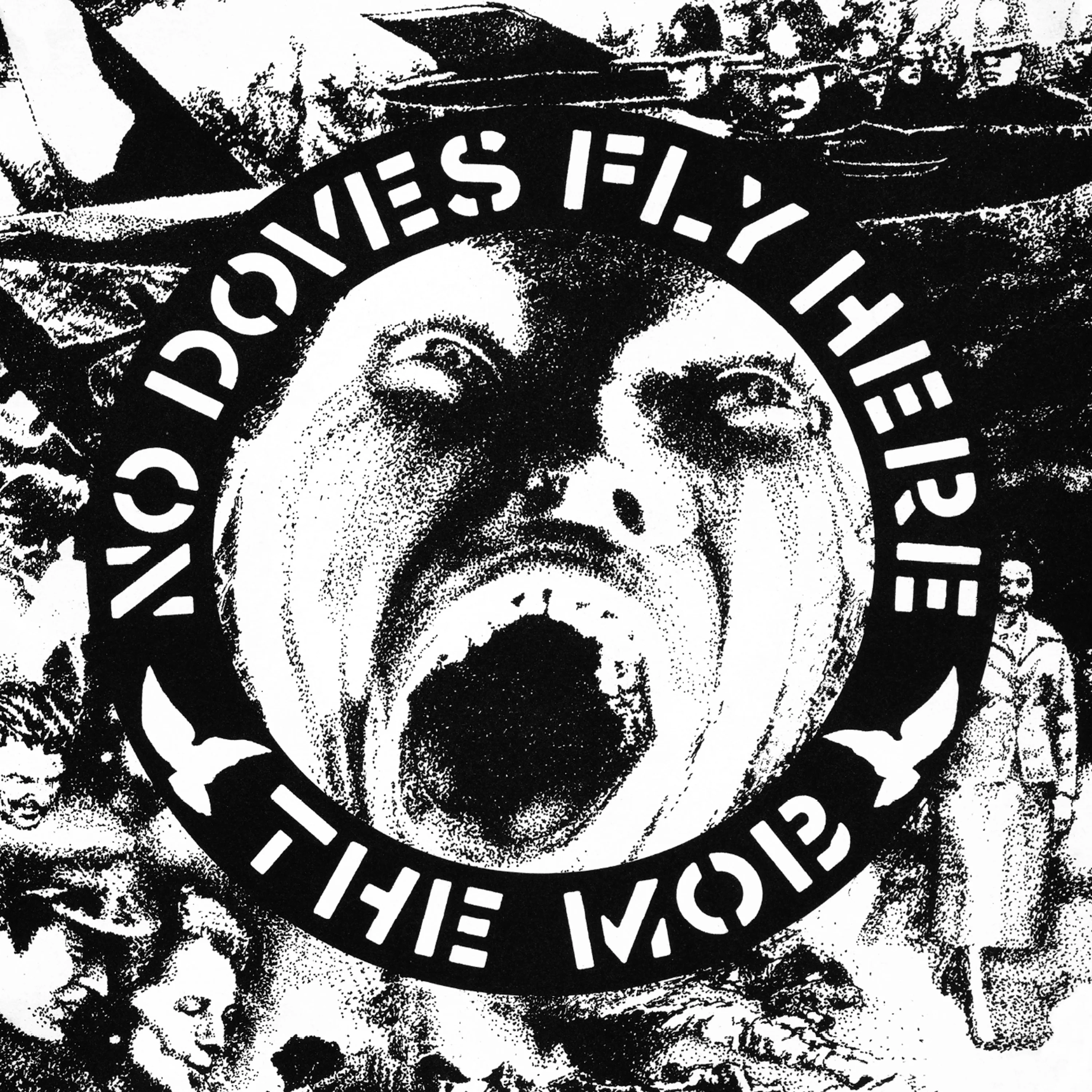
No Doves Fly Here
Punk pioneers Crass continue their vinyl reissue series, re-pressing their limited releases by adjacent artists through Crass Records, in association with One Little Independent. The series, including over twenty bands and solo artists recorded at the legendary Southern Studios and produced by Penny Rimbaud, continues with two more historic pieces from the Crass Records catalogue; The Snipers’ ‘ Three Peace Suite’ and The Mobs’ ‘No Doves Fly Here’.
Recorded over two intense days in September 1981 at Southern Studios, No Doves Fly Here by The Mob stands as a raw, unorthodox moment in anarcho-punk history. Produced by Penny Rimbaud and engineered alongside John Loder, the session saw Crass members and others pitch in — brewing endless pots of strong tea and occasionally manning a four-foot gong hired specially for the track. Mark, frontman of The Mob, recalls recording vocals word-by-word, a painstaking shift from the live takes of their previous releases. The result: a hauntingly deliberate performance unlike anything else on the Crass label. Paired with I Hear You Laughing, a live favorite, the single is a testament to the spirit of experimentation, DIY collaboration, and creative trust that defined the era.
Penny Rimbaud tells us; “Mirroring John and Yoko’s ‘peace not war’ profundities, The Mob’s ‘No Doves Fly Here’ stands out as one of the great classic tracks of the punk era. Profound in its poetics, and poignantly atmospheric in its arrangement, it expresses so much of the hopes and aspirations that later became known as ‘anarcho-punk’ (hitherto the ‘peace movement’). ‘War is over if you want it’, the dream is not over.”
Penny finally notes that “Our (Crass’) interest was never in personalities, profits or power, and neither did we have time for reformist liberals. Our position was solidly revolutionary; we took no prisoners. Ours wasn’t a show, it was a battle, not a living, but a lifestyle, a lifestyle with a difference – rather than looking only to ourselves, we sought to share our gains. I feel that this willingness added great strength to the form of anarchism that we practiced both on stage and out on the street.”
In giving a platform to an impressive array of other bands, Crass Records broadened the front of what popularly became known as anarcho-punk. Not, it must be said, a moniker that Crass themselves much favoured. In this respect, Crass’ classic line, “There is no authority but yourself”, makes its point. Crass sought to empower others, and the output of Crass Records does much to confirm this, while ‘2 By 2 And Back Again’ seems to nail it – “get out of your own way, we’re all in this together”.
No Doves Fly Here
Punk pioneers Crass continue their vinyl reissue series, re-pressing their limited releases by adjacent artists through Crass Records, in association with One Little Independent. The series, including over twenty bands and solo artists recorded at the legendary Southern Studios and produced by Penny Rimbaud, continues with two more historic pieces from the Crass Records catalogue; The Snipers’ ‘ Three Peace Suite’ and The Mobs’ ‘No Doves Fly Here’.
Recorded over two intense days in September 1981 at Southern Studios, No Doves Fly Here by The Mob stands as a raw, unorthodox moment in anarcho-punk history. Produced by Penny Rimbaud and engineered alongside John Loder, the session saw Crass members and others pitch in — brewing endless pots of strong tea and occasionally manning a four-foot gong hired specially for the track. Mark, frontman of The Mob, recalls recording vocals word-by-word, a painstaking shift from the live takes of their previous releases. The result: a hauntingly deliberate performance unlike anything else on the Crass label. Paired with I Hear You Laughing, a live favorite, the single is a testament to the spirit of experimentation, DIY collaboration, and creative trust that defined the era.
Penny Rimbaud tells us; “Mirroring John and Yoko’s ‘peace not war’ profundities, The Mob’s ‘No Doves Fly Here’ stands out as one of the great classic tracks of the punk era. Profound in its poetics, and poignantly atmospheric in its arrangement, it expresses so much of the hopes and aspirations that later became known as ‘anarcho-punk’ (hitherto the ‘peace movement’). ‘War is over if you want it’, the dream is not over.”
Penny finally notes that “Our (Crass’) interest was never in personalities, profits or power, and neither did we have time for reformist liberals. Our position was solidly revolutionary; we took no prisoners. Ours wasn’t a show, it was a battle, not a living, but a lifestyle, a lifestyle with a difference – rather than looking only to ourselves, we sought to share our gains. I feel that this willingness added great strength to the form of anarchism that we practiced both on stage and out on the street.”
In giving a platform to an impressive array of other bands, Crass Records broadened the front of what popularly became known as anarcho-punk. Not, it must be said, a moniker that Crass themselves much favoured. In this respect, Crass’ classic line, “There is no authority but yourself”, makes its point. Crass sought to empower others, and the output of Crass Records does much to confirm this, while ‘2 By 2 And Back Again’ seems to nail it – “get out of your own way, we’re all in this together”.
Product Information
Product Information
Shipping & Returns
Shipping & Returns
Description
Punk pioneers Crass continue their vinyl reissue series, re-pressing their limited releases by adjacent artists through Crass Records, in association with One Little Independent. The series, including over twenty bands and solo artists recorded at the legendary Southern Studios and produced by Penny Rimbaud, continues with two more historic pieces from the Crass Records catalogue; The Snipers’ ‘ Three Peace Suite’ and The Mobs’ ‘No Doves Fly Here’.
Recorded over two intense days in September 1981 at Southern Studios, No Doves Fly Here by The Mob stands as a raw, unorthodox moment in anarcho-punk history. Produced by Penny Rimbaud and engineered alongside John Loder, the session saw Crass members and others pitch in — brewing endless pots of strong tea and occasionally manning a four-foot gong hired specially for the track. Mark, frontman of The Mob, recalls recording vocals word-by-word, a painstaking shift from the live takes of their previous releases. The result: a hauntingly deliberate performance unlike anything else on the Crass label. Paired with I Hear You Laughing, a live favorite, the single is a testament to the spirit of experimentation, DIY collaboration, and creative trust that defined the era.
Penny Rimbaud tells us; “Mirroring John and Yoko’s ‘peace not war’ profundities, The Mob’s ‘No Doves Fly Here’ stands out as one of the great classic tracks of the punk era. Profound in its poetics, and poignantly atmospheric in its arrangement, it expresses so much of the hopes and aspirations that later became known as ‘anarcho-punk’ (hitherto the ‘peace movement’). ‘War is over if you want it’, the dream is not over.”
Penny finally notes that “Our (Crass’) interest was never in personalities, profits or power, and neither did we have time for reformist liberals. Our position was solidly revolutionary; we took no prisoners. Ours wasn’t a show, it was a battle, not a living, but a lifestyle, a lifestyle with a difference – rather than looking only to ourselves, we sought to share our gains. I feel that this willingness added great strength to the form of anarchism that we practiced both on stage and out on the street.”
In giving a platform to an impressive array of other bands, Crass Records broadened the front of what popularly became known as anarcho-punk. Not, it must be said, a moniker that Crass themselves much favoured. In this respect, Crass’ classic line, “There is no authority but yourself”, makes its point. Crass sought to empower others, and the output of Crass Records does much to confirm this, while ‘2 By 2 And Back Again’ seems to nail it – “get out of your own way, we’re all in this together”.