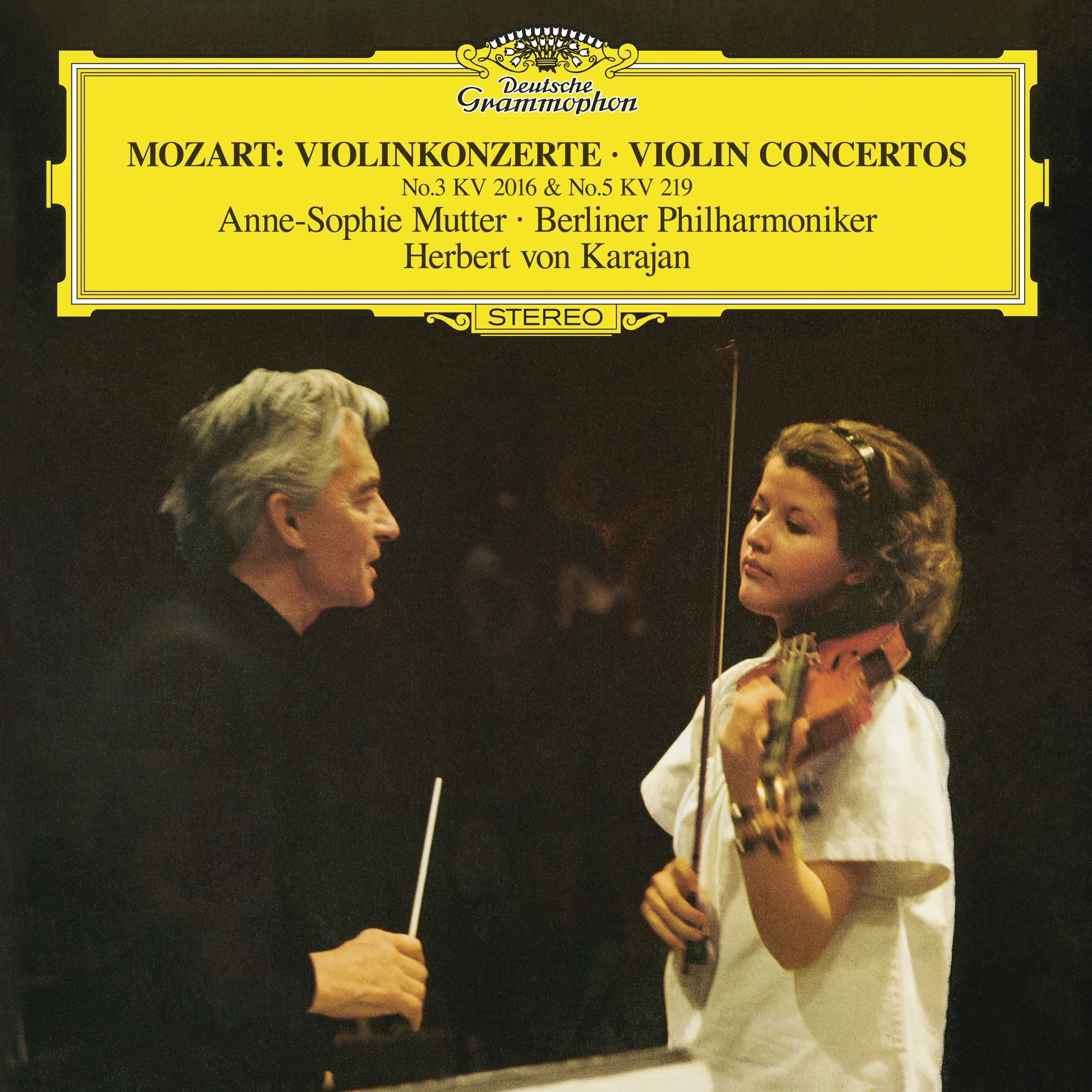
Mozart: Violin Concertos Nos. 3 and 5 (Original Source Series)
Some sensations occur without much ado, as they almost seem to be a matter of course. One such sensation look place at the Berlin Philharmonic Hall in February 1978, when Herbertvon Karajan introduced the 14-year-old violinist Anne-Sophie Mutter to the Berlin public in Mozart’s G major Concerto. After the young musician had gone through her baptism of fire with flying colours the conductor beamed, and the Berliner Philharmoniker players applauded enthusiastically ‒ a rare occurrence. Her fellow-performers and the audience had been equally aware of how auspicious her debut had been.
Karajan had met the 13-year-old Mutter in 1976 and invited her to make her concerto debut with the Berliner Philharmoniker at the Salzburg Whitsun Festival in 1977, which led to their collaboration on this recording. Despite sending her away to mature for another year after their initial meeting, the second session was a great success and a lesson that Mutter has never forgotten. ‘We sat next to each other studying the score as the daylight died, too engrossed to turn on the lights, and he talked about legato and bow changes and fingerings. Whenever I said, “This is not possible, maestro,” he would say, “I don’t care if it is violinistically possible; it must be musically possible. Everything you do must be driven from the point of view of music making.”
Original: $57.34
-70%$57.34
$17.20More Images
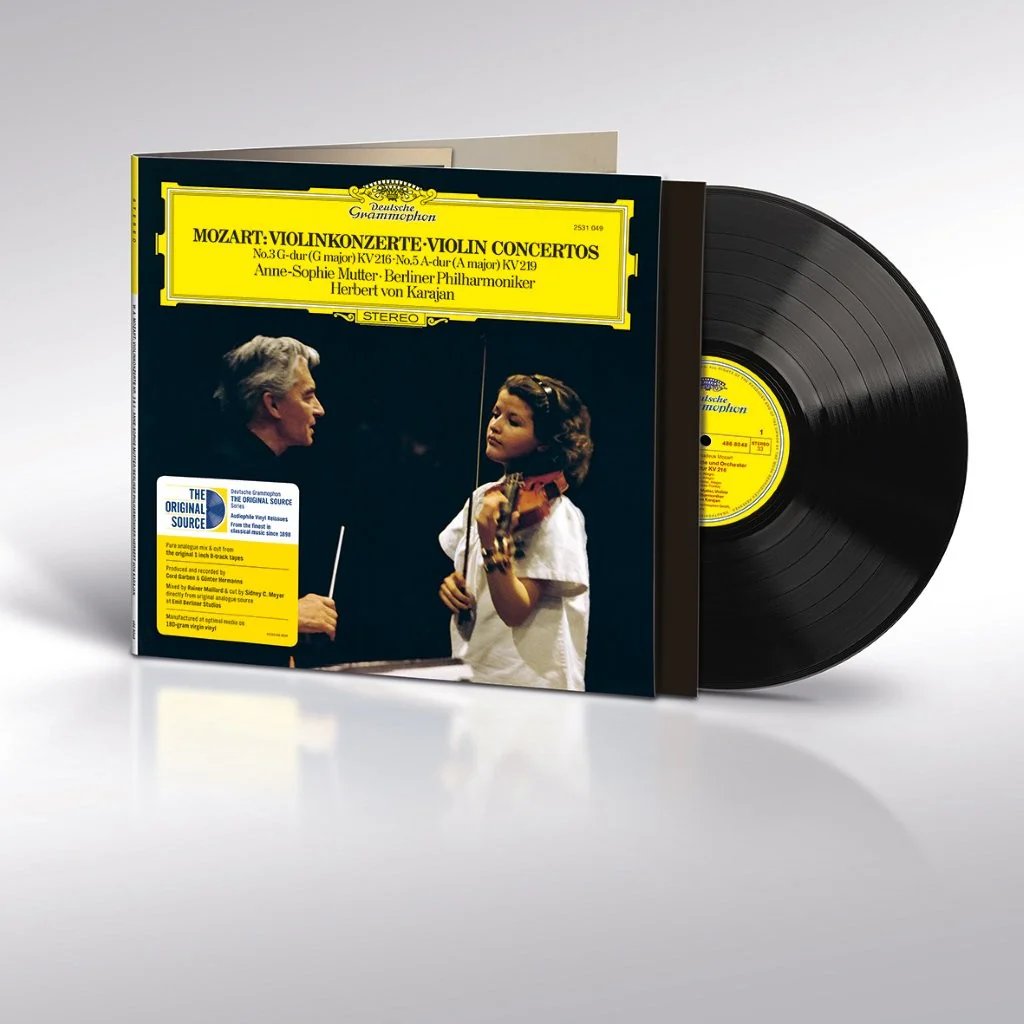
Mozart: Violin Concertos Nos. 3 and 5 (Original Source Series)
Some sensations occur without much ado, as they almost seem to be a matter of course. One such sensation look place at the Berlin Philharmonic Hall in February 1978, when Herbertvon Karajan introduced the 14-year-old violinist Anne-Sophie Mutter to the Berlin public in Mozart’s G major Concerto. After the young musician had gone through her baptism of fire with flying colours the conductor beamed, and the Berliner Philharmoniker players applauded enthusiastically ‒ a rare occurrence. Her fellow-performers and the audience had been equally aware of how auspicious her debut had been.
Karajan had met the 13-year-old Mutter in 1976 and invited her to make her concerto debut with the Berliner Philharmoniker at the Salzburg Whitsun Festival in 1977, which led to their collaboration on this recording. Despite sending her away to mature for another year after their initial meeting, the second session was a great success and a lesson that Mutter has never forgotten. ‘We sat next to each other studying the score as the daylight died, too engrossed to turn on the lights, and he talked about legato and bow changes and fingerings. Whenever I said, “This is not possible, maestro,” he would say, “I don’t care if it is violinistically possible; it must be musically possible. Everything you do must be driven from the point of view of music making.”
Product Information
Product Information
Shipping & Returns
Shipping & Returns
Description
Some sensations occur without much ado, as they almost seem to be a matter of course. One such sensation look place at the Berlin Philharmonic Hall in February 1978, when Herbertvon Karajan introduced the 14-year-old violinist Anne-Sophie Mutter to the Berlin public in Mozart’s G major Concerto. After the young musician had gone through her baptism of fire with flying colours the conductor beamed, and the Berliner Philharmoniker players applauded enthusiastically ‒ a rare occurrence. Her fellow-performers and the audience had been equally aware of how auspicious her debut had been.
Karajan had met the 13-year-old Mutter in 1976 and invited her to make her concerto debut with the Berliner Philharmoniker at the Salzburg Whitsun Festival in 1977, which led to their collaboration on this recording. Despite sending her away to mature for another year after their initial meeting, the second session was a great success and a lesson that Mutter has never forgotten. ‘We sat next to each other studying the score as the daylight died, too engrossed to turn on the lights, and he talked about legato and bow changes and fingerings. Whenever I said, “This is not possible, maestro,” he would say, “I don’t care if it is violinistically possible; it must be musically possible. Everything you do must be driven from the point of view of music making.”