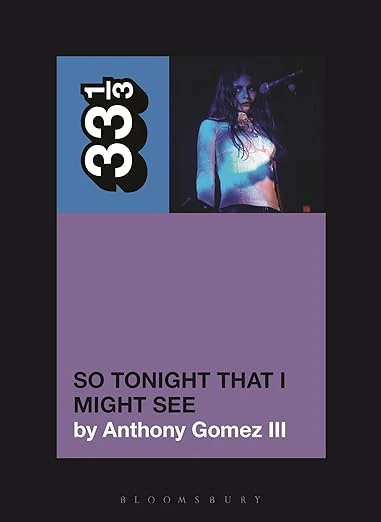
Mazzy Star’s So Tonight That I Might See (33 1/3)
Anthony Gomez III explores how out of the commercial failure of the 1980s Paisley Underground genre, a Los Angeles that suffered one of the highest crime rates in the country, the rise of Chicano/a art in the public eye, and record label disputes, singer Hope Sandoval and guitarist David Roback form the influential dream pop band Mazzy Star.
Mazzy Star’s So Tonight That I Might See was a slow, reluctant success. Pushed by Capitol Records as an album for teenagers to make out during, as a record about girlhood, and as music for those uninterested in the era’s male aggression, the album’s reputation has been plagued by these forced connections ever since.
Not that the band’s Hope Sandoval or David Roback ever publicly cared to dispel these notions. They preferred to disdain publicity and offer their art without introduction. But there is far more to the Mazzy Star story than media-reluctant musicians and corporate generated narratives.
Mazzy Star’s So Tonight That I Might See (33 1/3)
Anthony Gomez III explores how out of the commercial failure of the 1980s Paisley Underground genre, a Los Angeles that suffered one of the highest crime rates in the country, the rise of Chicano/a art in the public eye, and record label disputes, singer Hope Sandoval and guitarist David Roback form the influential dream pop band Mazzy Star.
Mazzy Star’s So Tonight That I Might See was a slow, reluctant success. Pushed by Capitol Records as an album for teenagers to make out during, as a record about girlhood, and as music for those uninterested in the era’s male aggression, the album’s reputation has been plagued by these forced connections ever since.
Not that the band’s Hope Sandoval or David Roback ever publicly cared to dispel these notions. They preferred to disdain publicity and offer their art without introduction. But there is far more to the Mazzy Star story than media-reluctant musicians and corporate generated narratives.
Product Information
Product Information
Shipping & Returns
Shipping & Returns
Description
Anthony Gomez III explores how out of the commercial failure of the 1980s Paisley Underground genre, a Los Angeles that suffered one of the highest crime rates in the country, the rise of Chicano/a art in the public eye, and record label disputes, singer Hope Sandoval and guitarist David Roback form the influential dream pop band Mazzy Star.
Mazzy Star’s So Tonight That I Might See was a slow, reluctant success. Pushed by Capitol Records as an album for teenagers to make out during, as a record about girlhood, and as music for those uninterested in the era’s male aggression, the album’s reputation has been plagued by these forced connections ever since.
Not that the band’s Hope Sandoval or David Roback ever publicly cared to dispel these notions. They preferred to disdain publicity and offer their art without introduction. But there is far more to the Mazzy Star story than media-reluctant musicians and corporate generated narratives.