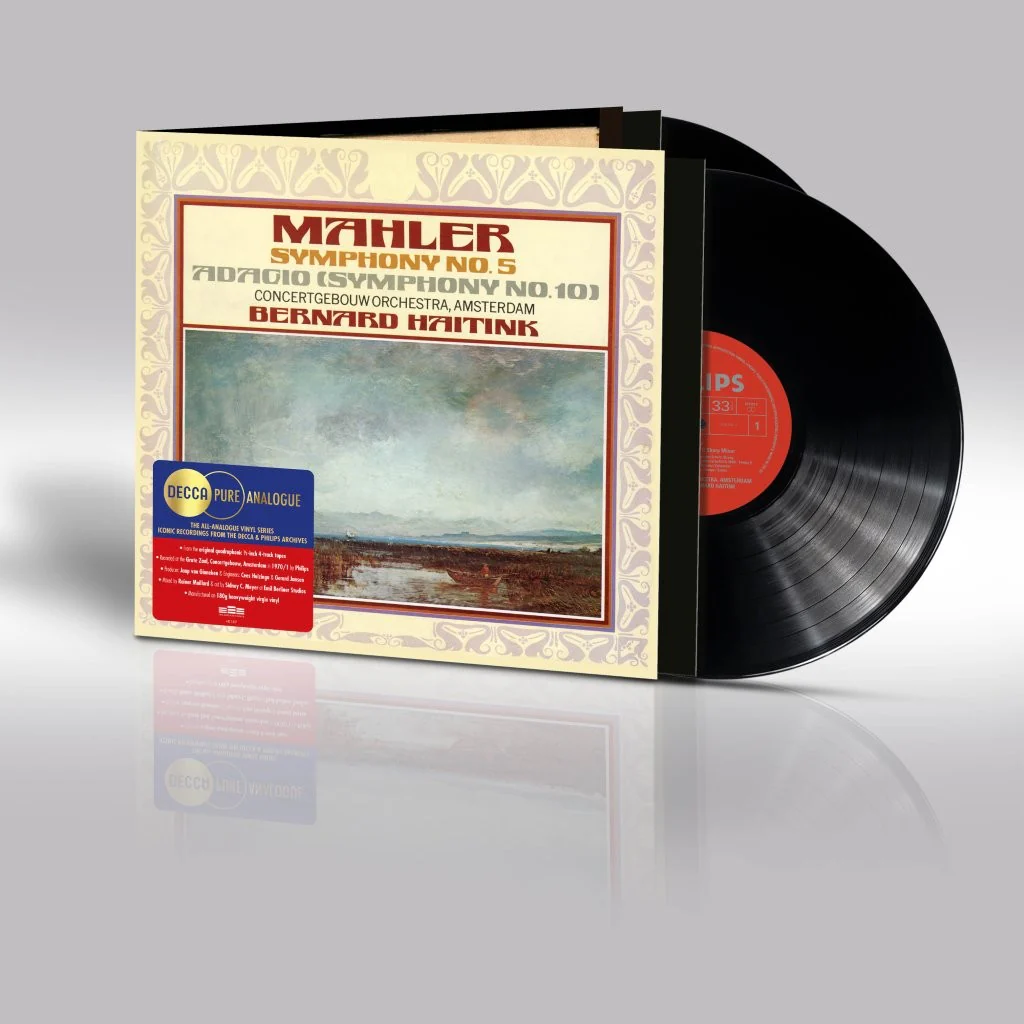
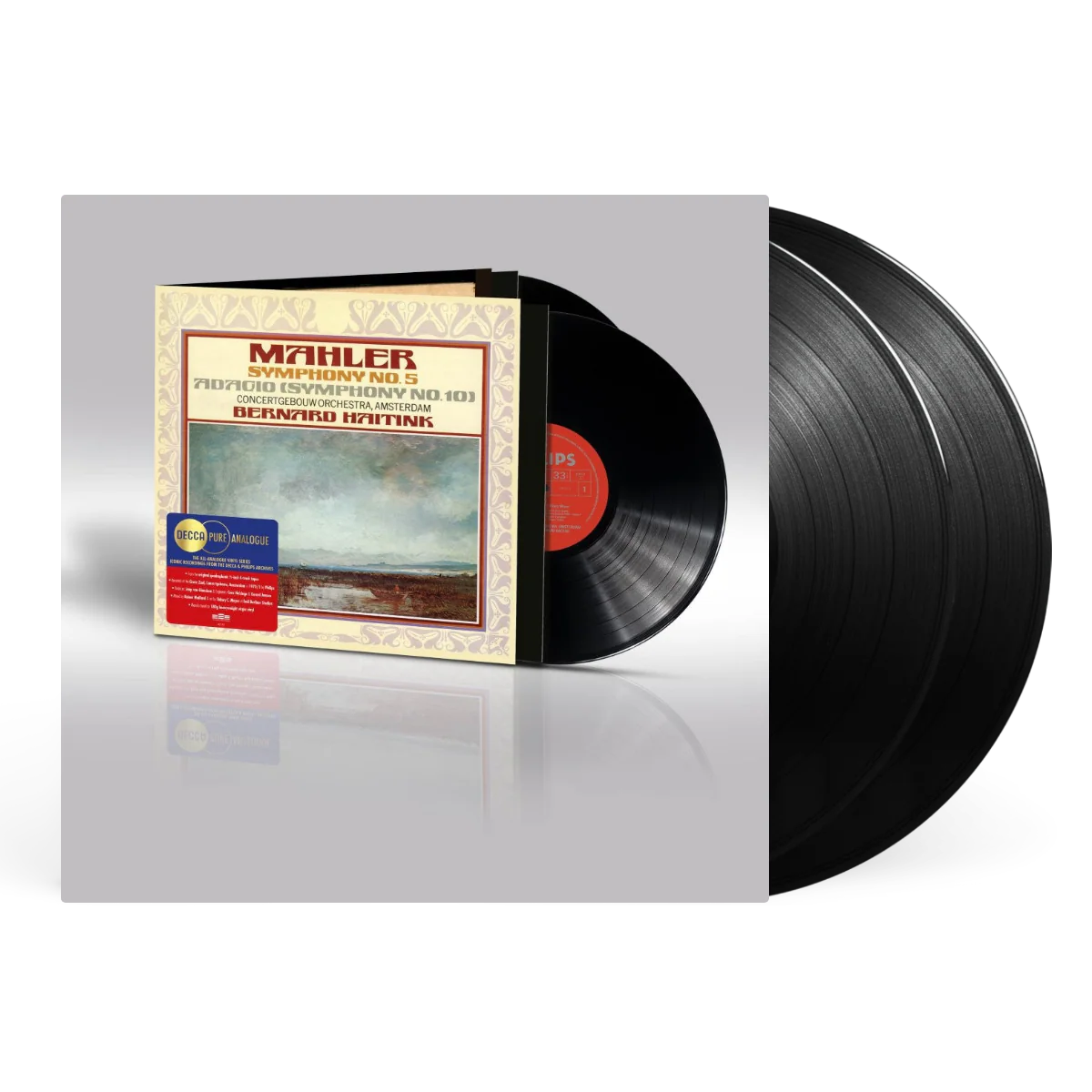
Mahler: Symphony Nos. 5 and 10 (Decca Pure Analogue)
Bernard Haitink’s Mahler has always been one of the glories of the Philips catalogue and the set of the 5th Symphony and Adagio from the 10th comes from the analogue cycle he made in the late 1960s and early 1970s. This 1970 recording was made quadraphonically in Amsterdam’s Concertgebouw and was praised by Gramophone for having “that special clarity which comes from a close balance”.
For this release Rainer Maillard at Emil Berliner Studios has used the original, four-track quadraphonic master tape to make a new stereo mix sent directly to the cutter head. This preserves a pure analogue path throughout. The Philips engineers of the 1970s would similarly have mixed the four front and rear channels before cutting but this downmix would have resulted in a two-track stereo copy for mastering, whereas here the lacquer is cut directly from a ‘live’ mix into stereo from the four Quad channels
Original: $98.68
-70%$98.68
$29.60More Images
Mahler: Symphony Nos. 5 and 10 (Decca Pure Analogue)
Bernard Haitink’s Mahler has always been one of the glories of the Philips catalogue and the set of the 5th Symphony and Adagio from the 10th comes from the analogue cycle he made in the late 1960s and early 1970s. This 1970 recording was made quadraphonically in Amsterdam’s Concertgebouw and was praised by Gramophone for having “that special clarity which comes from a close balance”.
For this release Rainer Maillard at Emil Berliner Studios has used the original, four-track quadraphonic master tape to make a new stereo mix sent directly to the cutter head. This preserves a pure analogue path throughout. The Philips engineers of the 1970s would similarly have mixed the four front and rear channels before cutting but this downmix would have resulted in a two-track stereo copy for mastering, whereas here the lacquer is cut directly from a ‘live’ mix into stereo from the four Quad channels
Product Information
Product Information
Shipping & Returns
Shipping & Returns
Description
Bernard Haitink’s Mahler has always been one of the glories of the Philips catalogue and the set of the 5th Symphony and Adagio from the 10th comes from the analogue cycle he made in the late 1960s and early 1970s. This 1970 recording was made quadraphonically in Amsterdam’s Concertgebouw and was praised by Gramophone for having “that special clarity which comes from a close balance”.
For this release Rainer Maillard at Emil Berliner Studios has used the original, four-track quadraphonic master tape to make a new stereo mix sent directly to the cutter head. This preserves a pure analogue path throughout. The Philips engineers of the 1970s would similarly have mixed the four front and rear channels before cutting but this downmix would have resulted in a two-track stereo copy for mastering, whereas here the lacquer is cut directly from a ‘live’ mix into stereo from the four Quad channels