Land Back
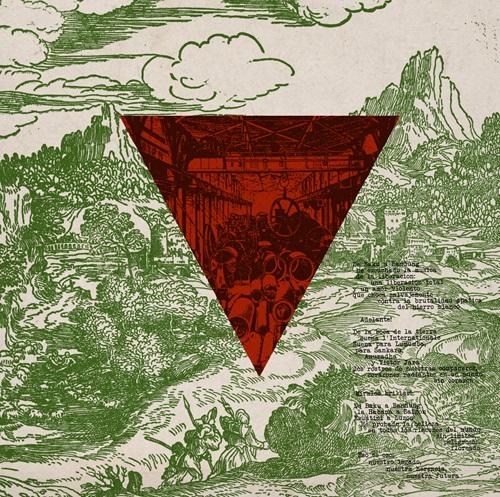
Following a period of relative quiet, cult "Sonoran drone rock" ensemble The Myrrors returns with their latest aural broadside. Founding members N.R. Safi (Naujawanan Baidar) and Grant Beyschau (Tambourinen, Pirámides) reunited with viola player Miguel Urbina in their desert hometown in late 2021 for an intensive week of improvisation, conversation, and recording, yielding the material for what should have been the immediate follow-up to their panoramic 2018 album Borderlands. Four years of global tumult later, we can finally hear the results - and (tragically) the material seems even more relevant today. Charging out of the gates with the aptly named "Breakthrough" and careening sharply into the anti-colonial cry of "Land Back," it is clear that The Myrrors have once again whittled new forms into the raw material of their now-recognizable sound. The uncontrollable sparks only hinted at occasionally on previous albums has now emerged like a roaring wildfire, further highlighting the revolutionary politics that have always undergirded the band's art. Similarly, the cassette saturated grit heard across Safi and Beyschau's most recent ventures has clearly had an influence here, as the spectrality of previous productions has been hardened into something much more grounded and immediate. None of this is to say that the familiar influences of minimalism, spiritual jazz, and raga that underscored The Myrrors' previous work has been done away with. In fact, this new record sees the group honing even more deeply into these territories, especially through a renewed emphasis on Beyschau's saxophone kaleidoscopically transformed here through the manipulation of a vintage analogue tape delay.
Using Terry Riley's famed "time lag accumulator" technique, the band constructs a whirling tapestry of unpredictable sonic colors in which his single instrument can often ring out like a full ensemble in itself. In "Bakú a Bandung" all these disparate elements come together in a powerful, trance-like homage to the undying spirit of anti-imperialist resistance in the global peripheries. The pulsating throb of the bass and the wild swirl of instruments perhaps call to mind lines from the Afghan poet Rumi when he wrote in the Masnavi, Dance, when you're broken open Dance, if you've torn the bandage off Dance in the middle of the fighting Dance in your blood Dance when you're perfectly free But of course, as The Myrrors are quick to remind us in the title track, No one is free until we're all free Land Back arrives.
Original: $46.67
-70%$46.67
$14.00Land Back
Following a period of relative quiet, cult "Sonoran drone rock" ensemble The Myrrors returns with their latest aural broadside. Founding members N.R. Safi (Naujawanan Baidar) and Grant Beyschau (Tambourinen, Pirámides) reunited with viola player Miguel Urbina in their desert hometown in late 2021 for an intensive week of improvisation, conversation, and recording, yielding the material for what should have been the immediate follow-up to their panoramic 2018 album Borderlands. Four years of global tumult later, we can finally hear the results - and (tragically) the material seems even more relevant today. Charging out of the gates with the aptly named "Breakthrough" and careening sharply into the anti-colonial cry of "Land Back," it is clear that The Myrrors have once again whittled new forms into the raw material of their now-recognizable sound. The uncontrollable sparks only hinted at occasionally on previous albums has now emerged like a roaring wildfire, further highlighting the revolutionary politics that have always undergirded the band's art. Similarly, the cassette saturated grit heard across Safi and Beyschau's most recent ventures has clearly had an influence here, as the spectrality of previous productions has been hardened into something much more grounded and immediate. None of this is to say that the familiar influences of minimalism, spiritual jazz, and raga that underscored The Myrrors' previous work has been done away with. In fact, this new record sees the group honing even more deeply into these territories, especially through a renewed emphasis on Beyschau's saxophone kaleidoscopically transformed here through the manipulation of a vintage analogue tape delay.
Using Terry Riley's famed "time lag accumulator" technique, the band constructs a whirling tapestry of unpredictable sonic colors in which his single instrument can often ring out like a full ensemble in itself. In "Bakú a Bandung" all these disparate elements come together in a powerful, trance-like homage to the undying spirit of anti-imperialist resistance in the global peripheries. The pulsating throb of the bass and the wild swirl of instruments perhaps call to mind lines from the Afghan poet Rumi when he wrote in the Masnavi, Dance, when you're broken open Dance, if you've torn the bandage off Dance in the middle of the fighting Dance in your blood Dance when you're perfectly free But of course, as The Myrrors are quick to remind us in the title track, No one is free until we're all free Land Back arrives.
Product Information
Product Information
Shipping & Returns
Shipping & Returns
Description
Following a period of relative quiet, cult "Sonoran drone rock" ensemble The Myrrors returns with their latest aural broadside. Founding members N.R. Safi (Naujawanan Baidar) and Grant Beyschau (Tambourinen, Pirámides) reunited with viola player Miguel Urbina in their desert hometown in late 2021 for an intensive week of improvisation, conversation, and recording, yielding the material for what should have been the immediate follow-up to their panoramic 2018 album Borderlands. Four years of global tumult later, we can finally hear the results - and (tragically) the material seems even more relevant today. Charging out of the gates with the aptly named "Breakthrough" and careening sharply into the anti-colonial cry of "Land Back," it is clear that The Myrrors have once again whittled new forms into the raw material of their now-recognizable sound. The uncontrollable sparks only hinted at occasionally on previous albums has now emerged like a roaring wildfire, further highlighting the revolutionary politics that have always undergirded the band's art. Similarly, the cassette saturated grit heard across Safi and Beyschau's most recent ventures has clearly had an influence here, as the spectrality of previous productions has been hardened into something much more grounded and immediate. None of this is to say that the familiar influences of minimalism, spiritual jazz, and raga that underscored The Myrrors' previous work has been done away with. In fact, this new record sees the group honing even more deeply into these territories, especially through a renewed emphasis on Beyschau's saxophone kaleidoscopically transformed here through the manipulation of a vintage analogue tape delay.
Using Terry Riley's famed "time lag accumulator" technique, the band constructs a whirling tapestry of unpredictable sonic colors in which his single instrument can often ring out like a full ensemble in itself. In "Bakú a Bandung" all these disparate elements come together in a powerful, trance-like homage to the undying spirit of anti-imperialist resistance in the global peripheries. The pulsating throb of the bass and the wild swirl of instruments perhaps call to mind lines from the Afghan poet Rumi when he wrote in the Masnavi, Dance, when you're broken open Dance, if you've torn the bandage off Dance in the middle of the fighting Dance in your blood Dance when you're perfectly free But of course, as The Myrrors are quick to remind us in the title track, No one is free until we're all free Land Back arrives.