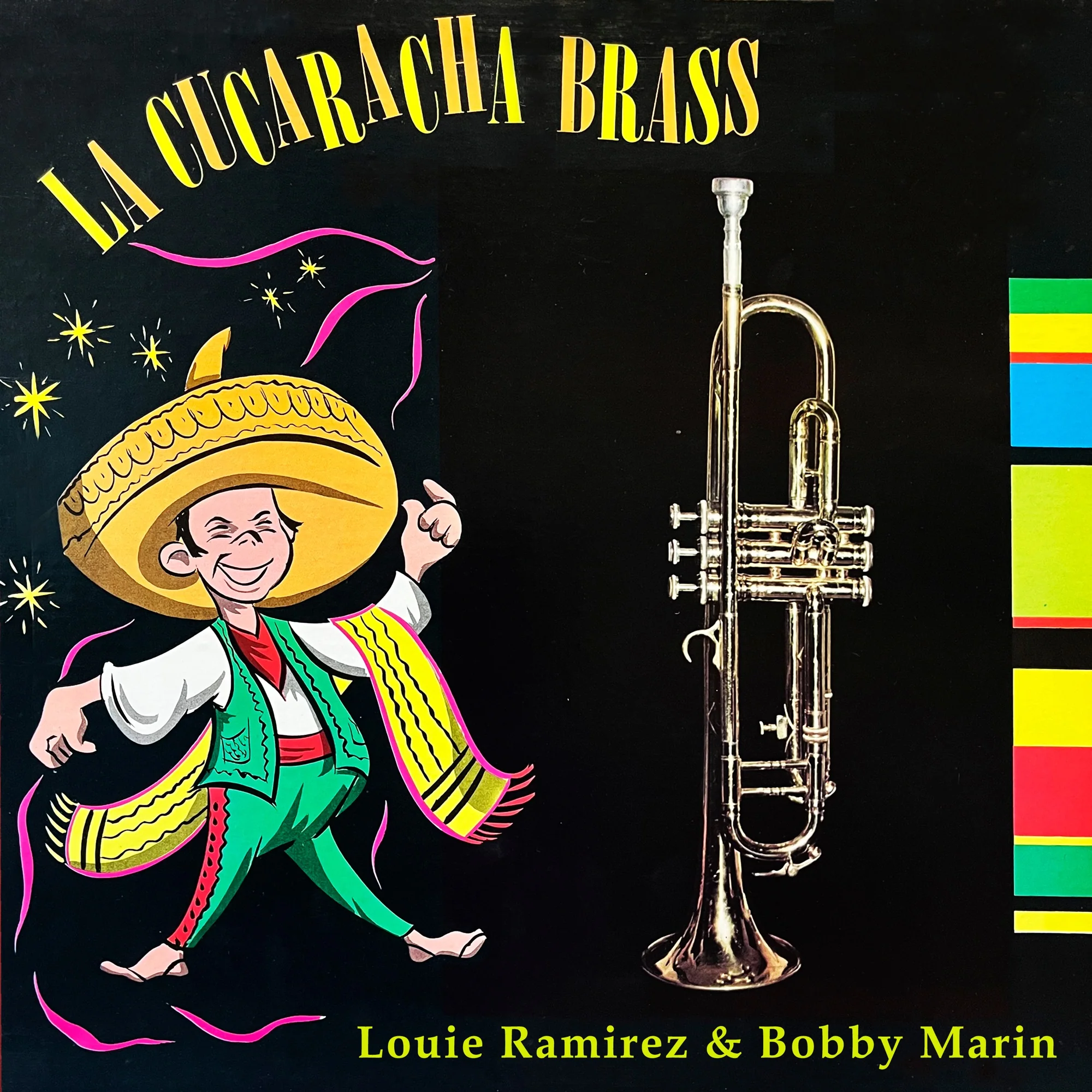
La Cucaracha Brass
During the sixties, especially the second half, Bobby Marín was an up-and-coming young Nuyorican who was responsible, along with his brother Richard, for producing, writing, or coordinating recordings by Louie Ramírez, Machito, The Nitty Gritty, Willie Rosario, Joe Cuba, Johnny Zamot, Kako and Azuquita, Charlie Palmieri, and others. Many of these artists were caught up in the ongoing boogaloo movement. So, it was not a surprise when Ismael Maisonave —an unsung hero of Latin music and owner of Mary Lou Records—approached Bobby with the idea of reissuing a Raphie Martínez album as a budget LP under a different name, resulting in “La Cucaracha Brass”. The songs selected for this compilation represent a point in time when the world was getting ready for an incipient monster called salsa, which would take over for years to come. The LP includes descargas, guaguancós, guarachas, as well as the declining boogaloo. It is a collection of recordings by different artists and was named Cucaracha Brass because at that time the group Tijuana Brass was very popular…
Most of the songs were taken (six out of eight, presumably) from the LP Raphie Martínez and the National Combo “Cool Man” (Mary Lou 1002). However, there are noticeable differences between the two albums. ‘Latin Power’ is an explosive instrumental guaracha and descarga, where the trumpet, congas, and timbales deliver powerful solos. ‘Takin’ Over’ — an instrumental boogaloo — appears as ‘We Are Taking Over’ on Raphie Martínez’s album (with a faster tempo and featuring a background voice). ‘Hey Mama,’ a boogaloo sung by Bobby Marín, is titled ‘Do It All Over’ on Martínez’s recording, featuring a different singer, different lyrics, and a different tempo. As well as the edited versions of tracks taken from Martínez’s album, this album comprises songs taken from other Mary Lou Records releases such as Quique Rosa y La Sabrosa Orchestra (Mary Lou 1020).
Original: $46.67
-70%$46.67
$14.00La Cucaracha Brass
During the sixties, especially the second half, Bobby Marín was an up-and-coming young Nuyorican who was responsible, along with his brother Richard, for producing, writing, or coordinating recordings by Louie Ramírez, Machito, The Nitty Gritty, Willie Rosario, Joe Cuba, Johnny Zamot, Kako and Azuquita, Charlie Palmieri, and others. Many of these artists were caught up in the ongoing boogaloo movement. So, it was not a surprise when Ismael Maisonave —an unsung hero of Latin music and owner of Mary Lou Records—approached Bobby with the idea of reissuing a Raphie Martínez album as a budget LP under a different name, resulting in “La Cucaracha Brass”. The songs selected for this compilation represent a point in time when the world was getting ready for an incipient monster called salsa, which would take over for years to come. The LP includes descargas, guaguancós, guarachas, as well as the declining boogaloo. It is a collection of recordings by different artists and was named Cucaracha Brass because at that time the group Tijuana Brass was very popular…
Most of the songs were taken (six out of eight, presumably) from the LP Raphie Martínez and the National Combo “Cool Man” (Mary Lou 1002). However, there are noticeable differences between the two albums. ‘Latin Power’ is an explosive instrumental guaracha and descarga, where the trumpet, congas, and timbales deliver powerful solos. ‘Takin’ Over’ — an instrumental boogaloo — appears as ‘We Are Taking Over’ on Raphie Martínez’s album (with a faster tempo and featuring a background voice). ‘Hey Mama,’ a boogaloo sung by Bobby Marín, is titled ‘Do It All Over’ on Martínez’s recording, featuring a different singer, different lyrics, and a different tempo. As well as the edited versions of tracks taken from Martínez’s album, this album comprises songs taken from other Mary Lou Records releases such as Quique Rosa y La Sabrosa Orchestra (Mary Lou 1020).
Product Information
Product Information
Shipping & Returns
Shipping & Returns
Description
During the sixties, especially the second half, Bobby Marín was an up-and-coming young Nuyorican who was responsible, along with his brother Richard, for producing, writing, or coordinating recordings by Louie Ramírez, Machito, The Nitty Gritty, Willie Rosario, Joe Cuba, Johnny Zamot, Kako and Azuquita, Charlie Palmieri, and others. Many of these artists were caught up in the ongoing boogaloo movement. So, it was not a surprise when Ismael Maisonave —an unsung hero of Latin music and owner of Mary Lou Records—approached Bobby with the idea of reissuing a Raphie Martínez album as a budget LP under a different name, resulting in “La Cucaracha Brass”. The songs selected for this compilation represent a point in time when the world was getting ready for an incipient monster called salsa, which would take over for years to come. The LP includes descargas, guaguancós, guarachas, as well as the declining boogaloo. It is a collection of recordings by different artists and was named Cucaracha Brass because at that time the group Tijuana Brass was very popular…
Most of the songs were taken (six out of eight, presumably) from the LP Raphie Martínez and the National Combo “Cool Man” (Mary Lou 1002). However, there are noticeable differences between the two albums. ‘Latin Power’ is an explosive instrumental guaracha and descarga, where the trumpet, congas, and timbales deliver powerful solos. ‘Takin’ Over’ — an instrumental boogaloo — appears as ‘We Are Taking Over’ on Raphie Martínez’s album (with a faster tempo and featuring a background voice). ‘Hey Mama,’ a boogaloo sung by Bobby Marín, is titled ‘Do It All Over’ on Martínez’s recording, featuring a different singer, different lyrics, and a different tempo. As well as the edited versions of tracks taken from Martínez’s album, this album comprises songs taken from other Mary Lou Records releases such as Quique Rosa y La Sabrosa Orchestra (Mary Lou 1020).