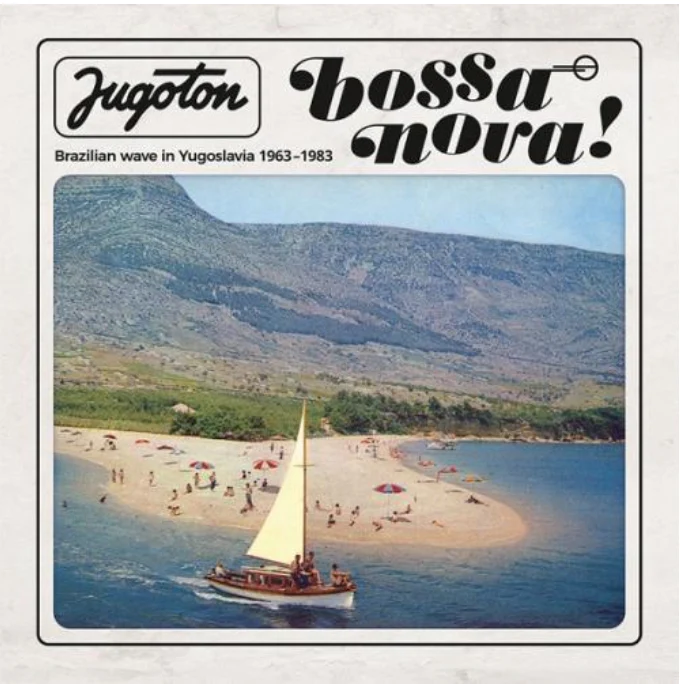
Jugoton Bossa Nova - Brazilian Wave in Yugoslavia 1963-1983
Rich musical history of Yugoslavia reveals a long-lasting love for the music of Latin America. Entwined in Afro-Cuban rhythms, ballrooms were shakin', swayin' and swingin', gathering musicians who were heavily into jazz bands and orchestras, most notably in Ljubljana, Zagreb, and Belgrade. Jazz could be heard on the streets of Split way back in 1919 when dancing became a symbol of freedom. Radio was the most loved household item, newest sheet music was in demand and collecting records was hip like today. In the aftermath of Second World War, jazz went underground but little by little, things changed and Ella, Satchmo, Dizzy and Miles came to visit, among others. Music festivals shaped the music for entertainment and variety of popular styles showed influences from all over the world. In the early sixties, one particular rhythm crashed on the coast of the Adriatic Sea: the rhythm of bossa nova! In the whirlwind of various musical styles, Latin American music still played important part of the scene in the early sixties Yugoslavia. Beguine, tango, rhumba, samba, calypso, mambo and cha-cha-cha all found their place on the festivals inspired by famous Sanremo, festival of Italian popular song that largely shaped the musical taste of Europe. It was the era of instrumental rock, R & B and rock'n'roll - sounds of "imperialist America" now played freely on imported and hand-made electric guitars. While dancing halls had been turning into concert venues, bossa nova has come! Eydie Gorme with Blame It on the Bossa Nova and Paul Anka with Eso Besso (That Kiss!) tried to make us learn some new dance moves but it was Joao Gilberto's gentle singing and his new way of playing samba songs, along with Tom Jobim's modern dissonant harmonies and poetry of Vinicius de Moraes that created the magic. When American alto saxophonist and flautist Bud Shank visited Zagreb and Ljubljana in 1963 (with Boško Petrović in his quintet) "it was the first time we heard bossa nova!" remembers Stjepan Braco Fučkar. Jugoton, the biggest record company in Yugoslavia, released 4-track EP Bossa Nova by Bogdan Dimitrijević and his ensemble that same year! While not being fully accepted or understood completely, the archives of Jugoton reveal to us various interpretations of this new trend from their vast catalogue. Compiled by Leo Hekman, also known as DJ D-Gree
Tracks
A1 / Arsen Dedić ? Onaj dan
(A. Dedić ? N. Kalogjera) Zabavni orkestar ? RTZ 1963
A2 / Zdenka Vučković ? Bosonoga
(M. Bogliuni ? I. Krajač ? K. Oblak) Festivalski revijski orkestar ? Jugoton 1964
A3 / Bogdan Dimitrijević ? O barquinho
(R. Menescal ? R. Boscoli) Ansambl Bogdana Dimitrijevića ? Jugoton 1963
A4 / Nino Robić ? Jedna nota (Samba de uma nota s?)*
(A. C. Jobim, N. Mendon?a ? Mario Kinel ? J. Robe?nik) Ansambl Mojmira Sepea ? PGP RTB 1963
A5 / Milan Bačić ? Hō-B?-L?-L?*
(J. Gilberto ? M. Kinel ? T. Simović)* Vokalni kvartet Melos i Ansambl Tomice Simovića ? PGP RTB 1966
B1 / Beti Jurković ? Ljuljačka
(B. Jurković ? M. Lentić ? M. Rijavec) Festivalski orkestar ? Jugoton 1965
B2 / Elda Viler ? Senca tvojega nasmeha (The Shadow of Your Smile)
(B. Webster ? M. Lindič ? M. Rijavec) Ljubljanski Jazz ansambel i Vokalni ansambel Optimisti ? Jugoton 1968
B3 / Arsen Dedić ? Često te sretnem
(N. Kalogjera ? A. Dedić -N. Kalogjera) Festivalski revijski orkestar ? Jugoton 1964
B4 / Bogdan Dimitrijević ? Hershey Bar
(S. Getz), Ansambl Bogdana Dimitrijevića ? Jugoton 1963
B5 / Zdenka Vučković ? Izgubljeno (Desafinado)
(A. C. Jobim, N. Mendon?a ? I. Krajač ? K. Oblak) Ansambl Kre?imira Oblaka ? Jugoton 1964
C1 / Drago Diklić ? Moja draga**
(S. Kalogjera ? I. Krajač ? S. Kalogjera) DD Big Band ? Alta 1973
C2 / Krunoslav Kićo Slabinac ? Tko si ti
(S. Glojnarić ? A. Dedić) Zabavni Orkestar RTZ ? Jugoton 1972
C3 / Plesni Orkestar RTZ ? Plava krizantema
(B. Hohnjec) ? Jugoton 1977
C4 / Gabi Novak i Radojka ?verko ? Za mene je sreća (Samba da Rosa)
(V. de Moraes / Toquinho ? A. Dedić ? M. Makar) ? Jugoton 1980
C5 / Dubrovački trubaduri ? Ljuven zov
(Đelo Jusić ? Stijepo Stra?ičić ? Đelo Jusić) ? Jugoton 1968
D1 / Vikica Bre?er ? Sunčano ljeto
(P. Gotovac ? D. Britvić ? K. Oblak) Veliki zabavni orkestar Rijeka ? Jugoton 1965
D2 / Drago Diklić ? Nitko na svijetu**
(D. Diklić ? K. Oblak) DD Big Band ? Alta 1973
D3 / Vi?nja Korbar ? Subotnje veče
(Z. ?pi?ić ? V. Lukatela ? R. Bosner) Festivalski zabavni orkestar ? Jugoton 1968
D4 / Arsen Dedić ? Večeras
(N. Kalogjera ? A. Dedić ? N. Kalogjera) Studijski orkestar ? Jugoton 1970
D5 / Jimmy Stanić & Glenn Rich Orchestra ? The girl from Ipanema
(A. C. Jobim ? N. Gimbel ? S. Glojnarić) ? Jugoton 1985
Original: $53.34
-70%$53.34
$16.00Jugoton Bossa Nova - Brazilian Wave in Yugoslavia 1963-1983
Rich musical history of Yugoslavia reveals a long-lasting love for the music of Latin America. Entwined in Afro-Cuban rhythms, ballrooms were shakin', swayin' and swingin', gathering musicians who were heavily into jazz bands and orchestras, most notably in Ljubljana, Zagreb, and Belgrade. Jazz could be heard on the streets of Split way back in 1919 when dancing became a symbol of freedom. Radio was the most loved household item, newest sheet music was in demand and collecting records was hip like today. In the aftermath of Second World War, jazz went underground but little by little, things changed and Ella, Satchmo, Dizzy and Miles came to visit, among others. Music festivals shaped the music for entertainment and variety of popular styles showed influences from all over the world. In the early sixties, one particular rhythm crashed on the coast of the Adriatic Sea: the rhythm of bossa nova! In the whirlwind of various musical styles, Latin American music still played important part of the scene in the early sixties Yugoslavia. Beguine, tango, rhumba, samba, calypso, mambo and cha-cha-cha all found their place on the festivals inspired by famous Sanremo, festival of Italian popular song that largely shaped the musical taste of Europe. It was the era of instrumental rock, R & B and rock'n'roll - sounds of "imperialist America" now played freely on imported and hand-made electric guitars. While dancing halls had been turning into concert venues, bossa nova has come! Eydie Gorme with Blame It on the Bossa Nova and Paul Anka with Eso Besso (That Kiss!) tried to make us learn some new dance moves but it was Joao Gilberto's gentle singing and his new way of playing samba songs, along with Tom Jobim's modern dissonant harmonies and poetry of Vinicius de Moraes that created the magic. When American alto saxophonist and flautist Bud Shank visited Zagreb and Ljubljana in 1963 (with Boško Petrović in his quintet) "it was the first time we heard bossa nova!" remembers Stjepan Braco Fučkar. Jugoton, the biggest record company in Yugoslavia, released 4-track EP Bossa Nova by Bogdan Dimitrijević and his ensemble that same year! While not being fully accepted or understood completely, the archives of Jugoton reveal to us various interpretations of this new trend from their vast catalogue. Compiled by Leo Hekman, also known as DJ D-Gree
Tracks
A1 / Arsen Dedić ? Onaj dan
(A. Dedić ? N. Kalogjera) Zabavni orkestar ? RTZ 1963
A2 / Zdenka Vučković ? Bosonoga
(M. Bogliuni ? I. Krajač ? K. Oblak) Festivalski revijski orkestar ? Jugoton 1964
A3 / Bogdan Dimitrijević ? O barquinho
(R. Menescal ? R. Boscoli) Ansambl Bogdana Dimitrijevića ? Jugoton 1963
A4 / Nino Robić ? Jedna nota (Samba de uma nota s?)*
(A. C. Jobim, N. Mendon?a ? Mario Kinel ? J. Robe?nik) Ansambl Mojmira Sepea ? PGP RTB 1963
A5 / Milan Bačić ? Hō-B?-L?-L?*
(J. Gilberto ? M. Kinel ? T. Simović)* Vokalni kvartet Melos i Ansambl Tomice Simovića ? PGP RTB 1966
B1 / Beti Jurković ? Ljuljačka
(B. Jurković ? M. Lentić ? M. Rijavec) Festivalski orkestar ? Jugoton 1965
B2 / Elda Viler ? Senca tvojega nasmeha (The Shadow of Your Smile)
(B. Webster ? M. Lindič ? M. Rijavec) Ljubljanski Jazz ansambel i Vokalni ansambel Optimisti ? Jugoton 1968
B3 / Arsen Dedić ? Često te sretnem
(N. Kalogjera ? A. Dedić -N. Kalogjera) Festivalski revijski orkestar ? Jugoton 1964
B4 / Bogdan Dimitrijević ? Hershey Bar
(S. Getz), Ansambl Bogdana Dimitrijevića ? Jugoton 1963
B5 / Zdenka Vučković ? Izgubljeno (Desafinado)
(A. C. Jobim, N. Mendon?a ? I. Krajač ? K. Oblak) Ansambl Kre?imira Oblaka ? Jugoton 1964
C1 / Drago Diklić ? Moja draga**
(S. Kalogjera ? I. Krajač ? S. Kalogjera) DD Big Band ? Alta 1973
C2 / Krunoslav Kićo Slabinac ? Tko si ti
(S. Glojnarić ? A. Dedić) Zabavni Orkestar RTZ ? Jugoton 1972
C3 / Plesni Orkestar RTZ ? Plava krizantema
(B. Hohnjec) ? Jugoton 1977
C4 / Gabi Novak i Radojka ?verko ? Za mene je sreća (Samba da Rosa)
(V. de Moraes / Toquinho ? A. Dedić ? M. Makar) ? Jugoton 1980
C5 / Dubrovački trubaduri ? Ljuven zov
(Đelo Jusić ? Stijepo Stra?ičić ? Đelo Jusić) ? Jugoton 1968
D1 / Vikica Bre?er ? Sunčano ljeto
(P. Gotovac ? D. Britvić ? K. Oblak) Veliki zabavni orkestar Rijeka ? Jugoton 1965
D2 / Drago Diklić ? Nitko na svijetu**
(D. Diklić ? K. Oblak) DD Big Band ? Alta 1973
D3 / Vi?nja Korbar ? Subotnje veče
(Z. ?pi?ić ? V. Lukatela ? R. Bosner) Festivalski zabavni orkestar ? Jugoton 1968
D4 / Arsen Dedić ? Večeras
(N. Kalogjera ? A. Dedić ? N. Kalogjera) Studijski orkestar ? Jugoton 1970
D5 / Jimmy Stanić & Glenn Rich Orchestra ? The girl from Ipanema
(A. C. Jobim ? N. Gimbel ? S. Glojnarić) ? Jugoton 1985
Product Information
Product Information
Shipping & Returns
Shipping & Returns
Description
Rich musical history of Yugoslavia reveals a long-lasting love for the music of Latin America. Entwined in Afro-Cuban rhythms, ballrooms were shakin', swayin' and swingin', gathering musicians who were heavily into jazz bands and orchestras, most notably in Ljubljana, Zagreb, and Belgrade. Jazz could be heard on the streets of Split way back in 1919 when dancing became a symbol of freedom. Radio was the most loved household item, newest sheet music was in demand and collecting records was hip like today. In the aftermath of Second World War, jazz went underground but little by little, things changed and Ella, Satchmo, Dizzy and Miles came to visit, among others. Music festivals shaped the music for entertainment and variety of popular styles showed influences from all over the world. In the early sixties, one particular rhythm crashed on the coast of the Adriatic Sea: the rhythm of bossa nova! In the whirlwind of various musical styles, Latin American music still played important part of the scene in the early sixties Yugoslavia. Beguine, tango, rhumba, samba, calypso, mambo and cha-cha-cha all found their place on the festivals inspired by famous Sanremo, festival of Italian popular song that largely shaped the musical taste of Europe. It was the era of instrumental rock, R & B and rock'n'roll - sounds of "imperialist America" now played freely on imported and hand-made electric guitars. While dancing halls had been turning into concert venues, bossa nova has come! Eydie Gorme with Blame It on the Bossa Nova and Paul Anka with Eso Besso (That Kiss!) tried to make us learn some new dance moves but it was Joao Gilberto's gentle singing and his new way of playing samba songs, along with Tom Jobim's modern dissonant harmonies and poetry of Vinicius de Moraes that created the magic. When American alto saxophonist and flautist Bud Shank visited Zagreb and Ljubljana in 1963 (with Boško Petrović in his quintet) "it was the first time we heard bossa nova!" remembers Stjepan Braco Fučkar. Jugoton, the biggest record company in Yugoslavia, released 4-track EP Bossa Nova by Bogdan Dimitrijević and his ensemble that same year! While not being fully accepted or understood completely, the archives of Jugoton reveal to us various interpretations of this new trend from their vast catalogue. Compiled by Leo Hekman, also known as DJ D-Gree
Tracks
A1 / Arsen Dedić ? Onaj dan
(A. Dedić ? N. Kalogjera) Zabavni orkestar ? RTZ 1963
A2 / Zdenka Vučković ? Bosonoga
(M. Bogliuni ? I. Krajač ? K. Oblak) Festivalski revijski orkestar ? Jugoton 1964
A3 / Bogdan Dimitrijević ? O barquinho
(R. Menescal ? R. Boscoli) Ansambl Bogdana Dimitrijevića ? Jugoton 1963
A4 / Nino Robić ? Jedna nota (Samba de uma nota s?)*
(A. C. Jobim, N. Mendon?a ? Mario Kinel ? J. Robe?nik) Ansambl Mojmira Sepea ? PGP RTB 1963
A5 / Milan Bačić ? Hō-B?-L?-L?*
(J. Gilberto ? M. Kinel ? T. Simović)* Vokalni kvartet Melos i Ansambl Tomice Simovića ? PGP RTB 1966
B1 / Beti Jurković ? Ljuljačka
(B. Jurković ? M. Lentić ? M. Rijavec) Festivalski orkestar ? Jugoton 1965
B2 / Elda Viler ? Senca tvojega nasmeha (The Shadow of Your Smile)
(B. Webster ? M. Lindič ? M. Rijavec) Ljubljanski Jazz ansambel i Vokalni ansambel Optimisti ? Jugoton 1968
B3 / Arsen Dedić ? Često te sretnem
(N. Kalogjera ? A. Dedić -N. Kalogjera) Festivalski revijski orkestar ? Jugoton 1964
B4 / Bogdan Dimitrijević ? Hershey Bar
(S. Getz), Ansambl Bogdana Dimitrijevića ? Jugoton 1963
B5 / Zdenka Vučković ? Izgubljeno (Desafinado)
(A. C. Jobim, N. Mendon?a ? I. Krajač ? K. Oblak) Ansambl Kre?imira Oblaka ? Jugoton 1964
C1 / Drago Diklić ? Moja draga**
(S. Kalogjera ? I. Krajač ? S. Kalogjera) DD Big Band ? Alta 1973
C2 / Krunoslav Kićo Slabinac ? Tko si ti
(S. Glojnarić ? A. Dedić) Zabavni Orkestar RTZ ? Jugoton 1972
C3 / Plesni Orkestar RTZ ? Plava krizantema
(B. Hohnjec) ? Jugoton 1977
C4 / Gabi Novak i Radojka ?verko ? Za mene je sreća (Samba da Rosa)
(V. de Moraes / Toquinho ? A. Dedić ? M. Makar) ? Jugoton 1980
C5 / Dubrovački trubaduri ? Ljuven zov
(Đelo Jusić ? Stijepo Stra?ičić ? Đelo Jusić) ? Jugoton 1968
D1 / Vikica Bre?er ? Sunčano ljeto
(P. Gotovac ? D. Britvić ? K. Oblak) Veliki zabavni orkestar Rijeka ? Jugoton 1965
D2 / Drago Diklić ? Nitko na svijetu**
(D. Diklić ? K. Oblak) DD Big Band ? Alta 1973
D3 / Vi?nja Korbar ? Subotnje veče
(Z. ?pi?ić ? V. Lukatela ? R. Bosner) Festivalski zabavni orkestar ? Jugoton 1968
D4 / Arsen Dedić ? Večeras
(N. Kalogjera ? A. Dedić ? N. Kalogjera) Studijski orkestar ? Jugoton 1970
D5 / Jimmy Stanić & Glenn Rich Orchestra ? The girl from Ipanema
(A. C. Jobim ? N. Gimbel ? S. Glojnarić) ? Jugoton 1985