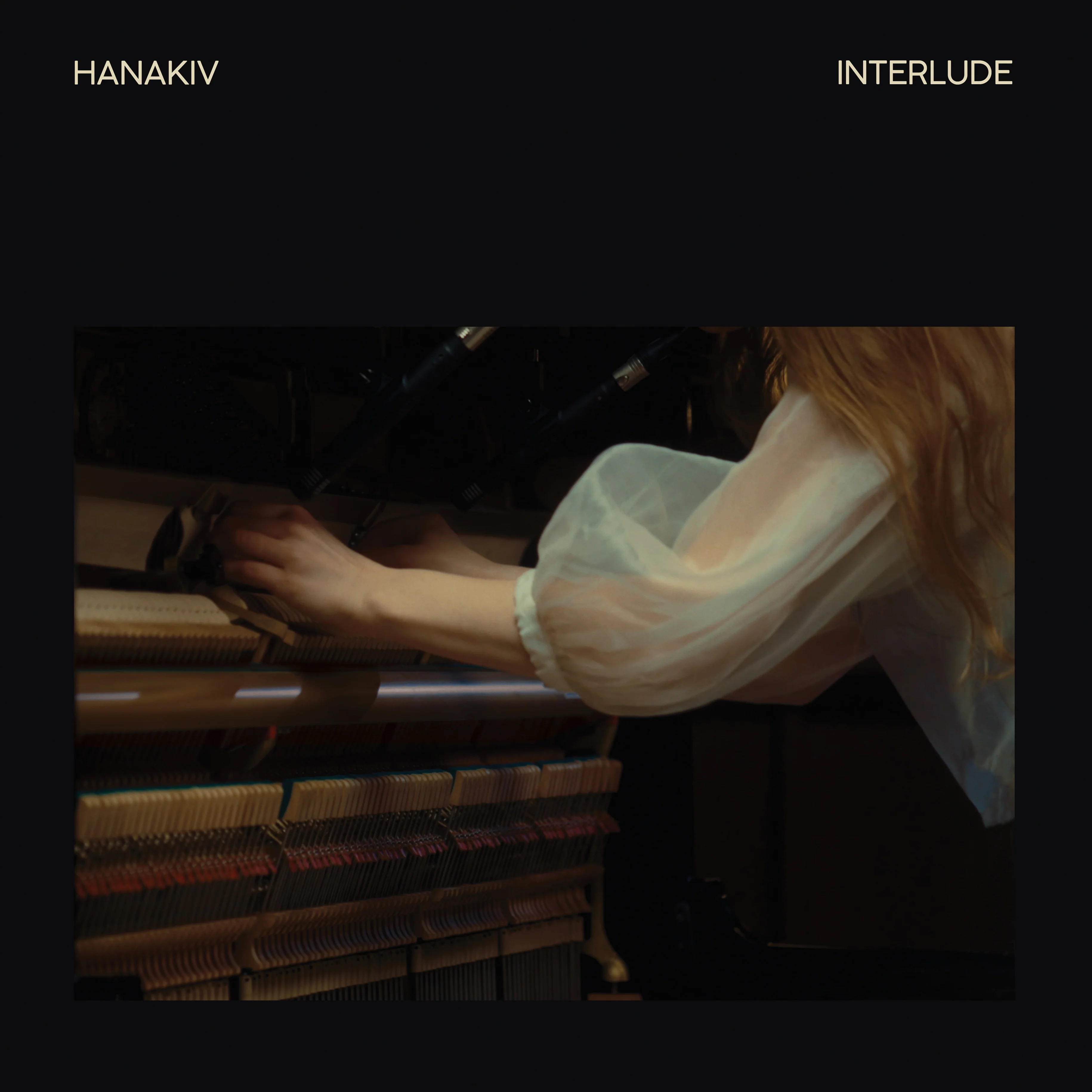
Interlude
Gondwana Records release Interlude, the second album from Estonian-born, London-based composer and pianist Hanakiv. Showcasing an expanded sound, the compositions trace a journey of overcoming the past, unfolding into a seductively unconventional style imbued with hope and a therapeutic quality.
Existing in a liminal space between genres, Interlude , the second album from composer, pianist and now singer Hanakiv is as mysterious as it’s seductively unconventional, with piano, often prepared, only one of its elements, both analogue and electronic. First inspired by “those crystallised moments where time almost stands still, pain hasn’t yet fully set in, and happiness is still just a glimpse,” it provides, all the same, “a sense of hope that standing still is part of living.” In its making, Hanakiv has created a space that allows her to address feelings long buried, whether the grief behind the lead single ‘Sunbeams’, where staccato rhythms punctuate murmured vocals; the eerie apparitions obscuring the innocence of ‘Lastele’, originally intended as a lullaby for her nephews; or the poignant torpor behind ‘May Song’s brittle blur of harmony and percussive pizzicatos.
Interlude's range is further intimated by its contributors, including Portico Quartet’s Milo Fitzpatrick, who, as well as playing double bass throughout, co-wrote the refreshed long-term live favourite, ‘Intro’, and the eloquent closer, Stillness’. Also present are saxophonist Pille-Rite Rei, cellist Joanna Gutowska, violinist Gabriel Green, and PIKE on drums, helping capture the instances Hanakiv calls “in- betweens”. Among these are two sunny mornings, years apart, during which the strangely forlorn yet haunting ‘Hommikud’ coalesced. Another significant turning point came with the writing of ‘Numb’. “Before then,” she confesses, “I was under the impression I was making music about stillness. This made me realise it was about numbness instead, and how easy it is to mix them up.” Listening to it, one gets a sense of what she means: though built around cascading piano lines, its tranquillity is undercut by unsettling swathes of cello strings, leaving the listener dazed. “I’d thought I was fine and functional,” she elaborates, “but I realised I wasn’t feeling. I wasn’t really living my life.”
Back then, having completed a master’s degree in Electroacoustic Composition at the Estonian Academy of Music and Theatre, she’d left behind her familiar instrument for internships in Malmö and Reykyavik. After a while, albeit only appreciated in hindsight, it was as though a part of her had perished. Finally able to play whenever she liked again, reignited her imagination, working on her own terms, all of it at home. “I could literally record at midnight,” she laughs. “There's a lot of felt on the piano due to neighbours and housemates, but I worked constantly, changing what I wanted. It was amazing, if I'm honest!”
This shift in emphasis empowered by the one instrument on which she could rely, lies at Interlude's heart. Nowhere is this illustrated more elegantly than in its final two pieces, which bring resolution and redemption in the insistent unfurling of ‘January Song’ and a crowning closure with ‘Stillness’.
Yet ultimately that’s exactly what Hanakiv does here, and in a world unlike any other. Unpredictable, unfathomable, candid and carefree, Interlude embodies flaws embraced as well as senses regained. After all, pianos come with a key. “That’s why,” she concludes, “Interlude has so much life. It's not only about numbness. It’s about what’s on the other side.” Pressed on high quality black BioVinyl at Optimal in Germany for maximum sound quality.
More Images
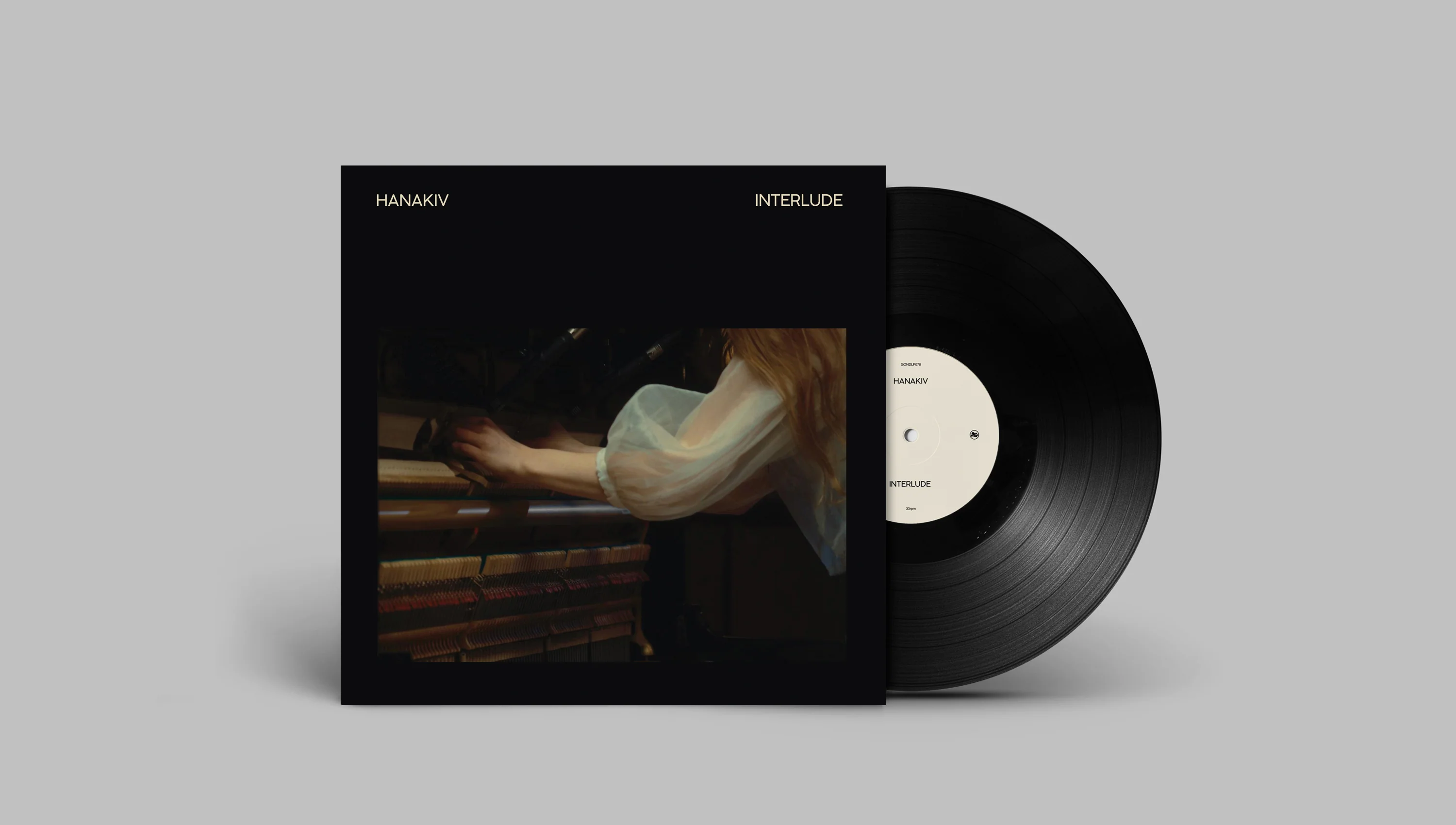
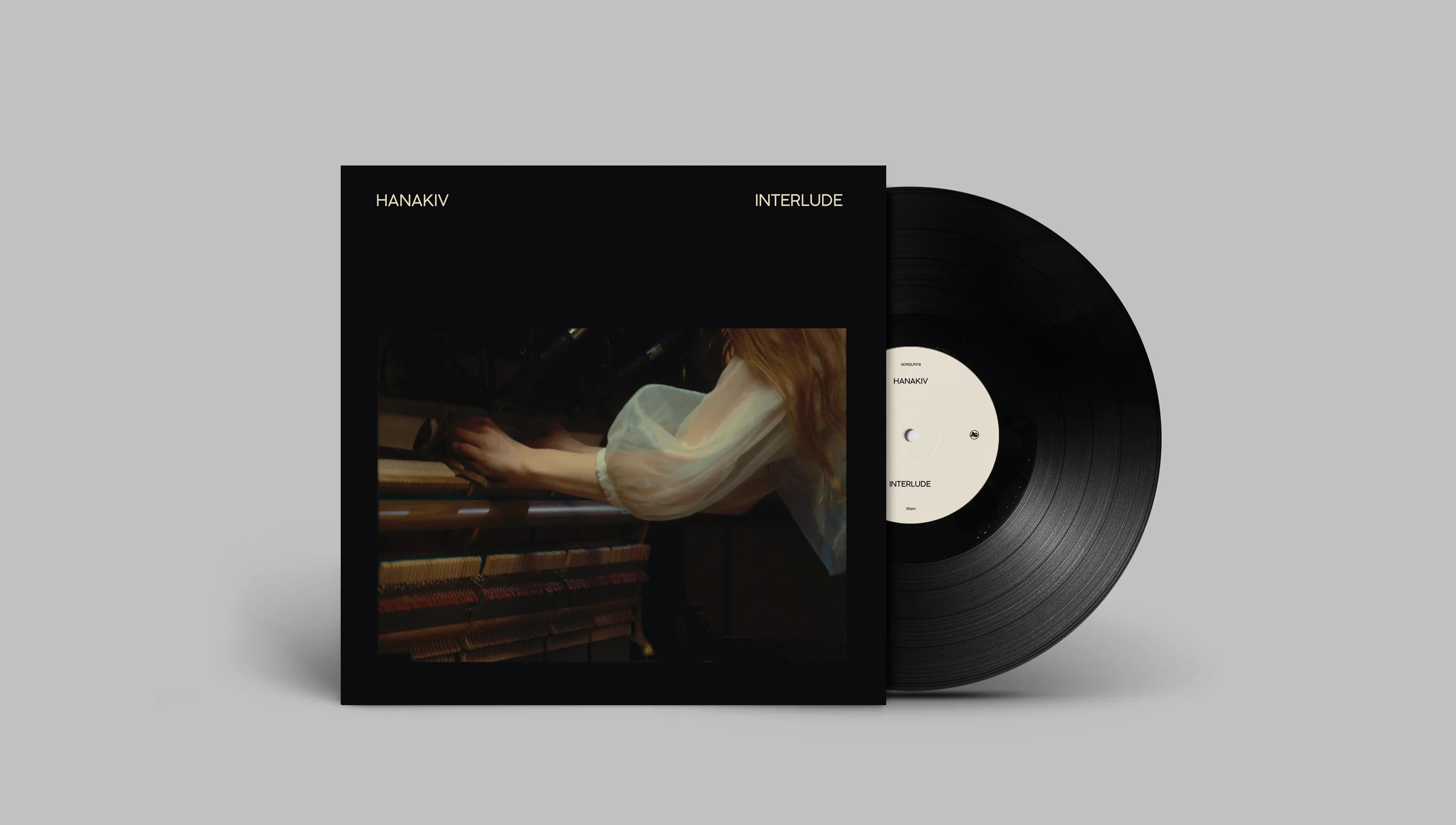
Interlude
Gondwana Records release Interlude, the second album from Estonian-born, London-based composer and pianist Hanakiv. Showcasing an expanded sound, the compositions trace a journey of overcoming the past, unfolding into a seductively unconventional style imbued with hope and a therapeutic quality.
Existing in a liminal space between genres, Interlude , the second album from composer, pianist and now singer Hanakiv is as mysterious as it’s seductively unconventional, with piano, often prepared, only one of its elements, both analogue and electronic. First inspired by “those crystallised moments where time almost stands still, pain hasn’t yet fully set in, and happiness is still just a glimpse,” it provides, all the same, “a sense of hope that standing still is part of living.” In its making, Hanakiv has created a space that allows her to address feelings long buried, whether the grief behind the lead single ‘Sunbeams’, where staccato rhythms punctuate murmured vocals; the eerie apparitions obscuring the innocence of ‘Lastele’, originally intended as a lullaby for her nephews; or the poignant torpor behind ‘May Song’s brittle blur of harmony and percussive pizzicatos.
Interlude's range is further intimated by its contributors, including Portico Quartet’s Milo Fitzpatrick, who, as well as playing double bass throughout, co-wrote the refreshed long-term live favourite, ‘Intro’, and the eloquent closer, Stillness’. Also present are saxophonist Pille-Rite Rei, cellist Joanna Gutowska, violinist Gabriel Green, and PIKE on drums, helping capture the instances Hanakiv calls “in- betweens”. Among these are two sunny mornings, years apart, during which the strangely forlorn yet haunting ‘Hommikud’ coalesced. Another significant turning point came with the writing of ‘Numb’. “Before then,” she confesses, “I was under the impression I was making music about stillness. This made me realise it was about numbness instead, and how easy it is to mix them up.” Listening to it, one gets a sense of what she means: though built around cascading piano lines, its tranquillity is undercut by unsettling swathes of cello strings, leaving the listener dazed. “I’d thought I was fine and functional,” she elaborates, “but I realised I wasn’t feeling. I wasn’t really living my life.”
Back then, having completed a master’s degree in Electroacoustic Composition at the Estonian Academy of Music and Theatre, she’d left behind her familiar instrument for internships in Malmö and Reykyavik. After a while, albeit only appreciated in hindsight, it was as though a part of her had perished. Finally able to play whenever she liked again, reignited her imagination, working on her own terms, all of it at home. “I could literally record at midnight,” she laughs. “There's a lot of felt on the piano due to neighbours and housemates, but I worked constantly, changing what I wanted. It was amazing, if I'm honest!”
This shift in emphasis empowered by the one instrument on which she could rely, lies at Interlude's heart. Nowhere is this illustrated more elegantly than in its final two pieces, which bring resolution and redemption in the insistent unfurling of ‘January Song’ and a crowning closure with ‘Stillness’.
Yet ultimately that’s exactly what Hanakiv does here, and in a world unlike any other. Unpredictable, unfathomable, candid and carefree, Interlude embodies flaws embraced as well as senses regained. After all, pianos come with a key. “That’s why,” she concludes, “Interlude has so much life. It's not only about numbness. It’s about what’s on the other side.” Pressed on high quality black BioVinyl at Optimal in Germany for maximum sound quality.
Product Information
Product Information
Shipping & Returns
Shipping & Returns
Description
Gondwana Records release Interlude, the second album from Estonian-born, London-based composer and pianist Hanakiv. Showcasing an expanded sound, the compositions trace a journey of overcoming the past, unfolding into a seductively unconventional style imbued with hope and a therapeutic quality.
Existing in a liminal space between genres, Interlude , the second album from composer, pianist and now singer Hanakiv is as mysterious as it’s seductively unconventional, with piano, often prepared, only one of its elements, both analogue and electronic. First inspired by “those crystallised moments where time almost stands still, pain hasn’t yet fully set in, and happiness is still just a glimpse,” it provides, all the same, “a sense of hope that standing still is part of living.” In its making, Hanakiv has created a space that allows her to address feelings long buried, whether the grief behind the lead single ‘Sunbeams’, where staccato rhythms punctuate murmured vocals; the eerie apparitions obscuring the innocence of ‘Lastele’, originally intended as a lullaby for her nephews; or the poignant torpor behind ‘May Song’s brittle blur of harmony and percussive pizzicatos.
Interlude's range is further intimated by its contributors, including Portico Quartet’s Milo Fitzpatrick, who, as well as playing double bass throughout, co-wrote the refreshed long-term live favourite, ‘Intro’, and the eloquent closer, Stillness’. Also present are saxophonist Pille-Rite Rei, cellist Joanna Gutowska, violinist Gabriel Green, and PIKE on drums, helping capture the instances Hanakiv calls “in- betweens”. Among these are two sunny mornings, years apart, during which the strangely forlorn yet haunting ‘Hommikud’ coalesced. Another significant turning point came with the writing of ‘Numb’. “Before then,” she confesses, “I was under the impression I was making music about stillness. This made me realise it was about numbness instead, and how easy it is to mix them up.” Listening to it, one gets a sense of what she means: though built around cascading piano lines, its tranquillity is undercut by unsettling swathes of cello strings, leaving the listener dazed. “I’d thought I was fine and functional,” she elaborates, “but I realised I wasn’t feeling. I wasn’t really living my life.”
Back then, having completed a master’s degree in Electroacoustic Composition at the Estonian Academy of Music and Theatre, she’d left behind her familiar instrument for internships in Malmö and Reykyavik. After a while, albeit only appreciated in hindsight, it was as though a part of her had perished. Finally able to play whenever she liked again, reignited her imagination, working on her own terms, all of it at home. “I could literally record at midnight,” she laughs. “There's a lot of felt on the piano due to neighbours and housemates, but I worked constantly, changing what I wanted. It was amazing, if I'm honest!”
This shift in emphasis empowered by the one instrument on which she could rely, lies at Interlude's heart. Nowhere is this illustrated more elegantly than in its final two pieces, which bring resolution and redemption in the insistent unfurling of ‘January Song’ and a crowning closure with ‘Stillness’.
Yet ultimately that’s exactly what Hanakiv does here, and in a world unlike any other. Unpredictable, unfathomable, candid and carefree, Interlude embodies flaws embraced as well as senses regained. After all, pianos come with a key. “That’s why,” she concludes, “Interlude has so much life. It's not only about numbness. It’s about what’s on the other side.” Pressed on high quality black BioVinyl at Optimal in Germany for maximum sound quality.