From Cuba to Harlem
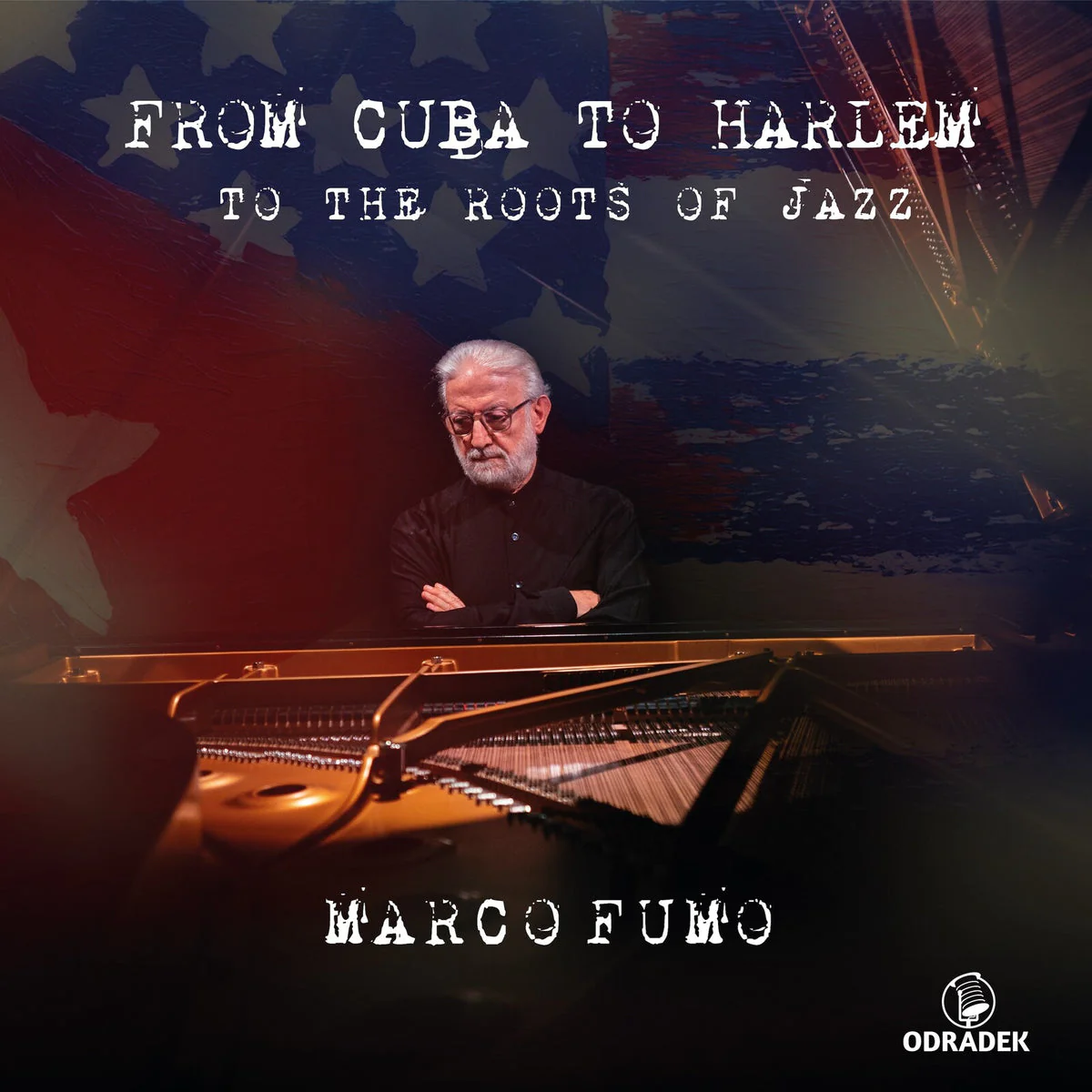
In his swansong album, Italian pianist Marco Fumo takes us to the roots of jazz: From Cuba to Harlem. Marco Fumo is considered to be one of the best recent interpreters and champions of African American piano repertoire.
This album begins in Cuba in the mid 19th century, passes through Brazil and to the United States, where these varied cultural roots are further transformed into a flurry of different styles. At the centre of the journey is the piano, with its centuries-old European history of techniques and languages, which in the Americas is enriched with further chapters.
The music of the Cubans Saumell and Cervantes incorporates the rhythms and colours of street bands and traits of Afro-Cuban folklore. The album also highlights parallels between the choros of the Brazilian Ernesto Nazareth (which he called "tangos brasileiros"), and the ragtime of the American Scott Joplin, of whose music Fumo is an expert interpreter having specialized in ragtime since an early stage in his career.
Jelly Roll Morton enriched these forms with Cuban-Spanish and blues idioms in "New Orleans Joys," and from the east coast of the United States, we have examples of African American pianists who forged ragtime into a rapid and virtuosic style, with the stride piano of Willie 'The Lion' Smith, James P. Johnson, Hank Duncan that in turn would light the fuse of piano jazz.
Original: $22.66
-70%$22.66
$6.80From Cuba to Harlem
In his swansong album, Italian pianist Marco Fumo takes us to the roots of jazz: From Cuba to Harlem. Marco Fumo is considered to be one of the best recent interpreters and champions of African American piano repertoire.
This album begins in Cuba in the mid 19th century, passes through Brazil and to the United States, where these varied cultural roots are further transformed into a flurry of different styles. At the centre of the journey is the piano, with its centuries-old European history of techniques and languages, which in the Americas is enriched with further chapters.
The music of the Cubans Saumell and Cervantes incorporates the rhythms and colours of street bands and traits of Afro-Cuban folklore. The album also highlights parallels between the choros of the Brazilian Ernesto Nazareth (which he called "tangos brasileiros"), and the ragtime of the American Scott Joplin, of whose music Fumo is an expert interpreter having specialized in ragtime since an early stage in his career.
Jelly Roll Morton enriched these forms with Cuban-Spanish and blues idioms in "New Orleans Joys," and from the east coast of the United States, we have examples of African American pianists who forged ragtime into a rapid and virtuosic style, with the stride piano of Willie 'The Lion' Smith, James P. Johnson, Hank Duncan that in turn would light the fuse of piano jazz.
Product Information
Product Information
Shipping & Returns
Shipping & Returns
Description
In his swansong album, Italian pianist Marco Fumo takes us to the roots of jazz: From Cuba to Harlem. Marco Fumo is considered to be one of the best recent interpreters and champions of African American piano repertoire.
This album begins in Cuba in the mid 19th century, passes through Brazil and to the United States, where these varied cultural roots are further transformed into a flurry of different styles. At the centre of the journey is the piano, with its centuries-old European history of techniques and languages, which in the Americas is enriched with further chapters.
The music of the Cubans Saumell and Cervantes incorporates the rhythms and colours of street bands and traits of Afro-Cuban folklore. The album also highlights parallels between the choros of the Brazilian Ernesto Nazareth (which he called "tangos brasileiros"), and the ragtime of the American Scott Joplin, of whose music Fumo is an expert interpreter having specialized in ragtime since an early stage in his career.
Jelly Roll Morton enriched these forms with Cuban-Spanish and blues idioms in "New Orleans Joys," and from the east coast of the United States, we have examples of African American pianists who forged ragtime into a rapid and virtuosic style, with the stride piano of Willie 'The Lion' Smith, James P. Johnson, Hank Duncan that in turn would light the fuse of piano jazz.