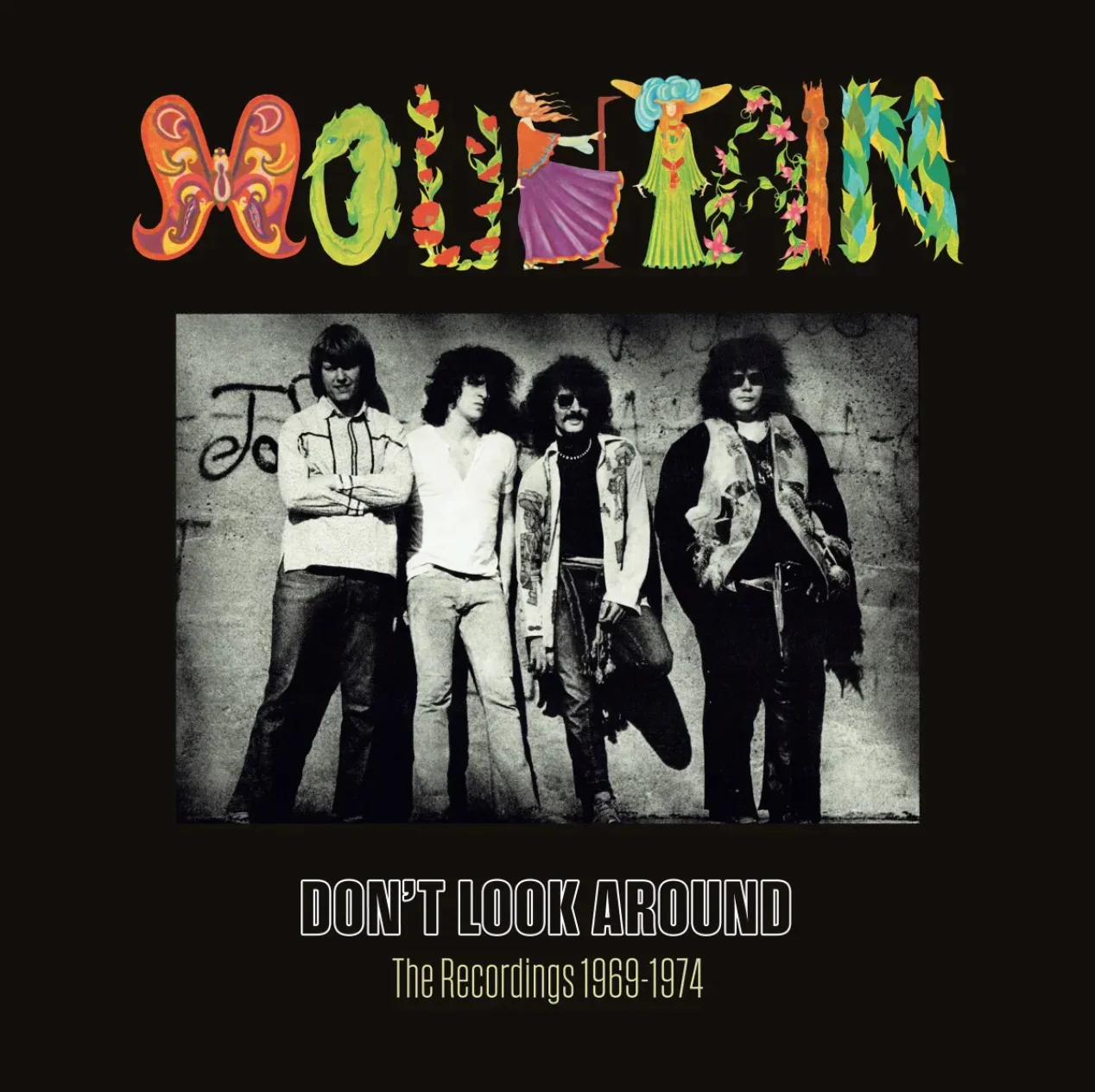
Don't Look Around - The Recordings 1969-1974
Founded in Long Island, New York in 1969, Mountain were one of the most influential American rock bands of the late 1960s/early 1970s. Their musical style fused blues, hard rock and progressive influences and was anchored around the virtuoso guitarist Leslie West, the producer, writer and multi-instrumentalist Felix Pappalardi, drummer Corky Laing and keyboard player Steve Knight.
Taking inspiration from the legendary British band Cream, West had approached producer Pappalardi (who had worked with Cream and Jack Bruce) with a view to him producing West’s first solo album. The resulting album ‘Mountain’ was released in July 1969 and saw West backed by Felix Pappalardi on bass and keyboards and drummer N.D. Smart. To promote the album a band was assembled with the addition of Steve Knight on keyboards.
Adopting the name Mountain, the band appeared at the Woodstock Festival in 1969 and made a significant impact. Shortly after this performance Smart was replaced by Corky Laing and Mountain embarked on the recording of their first studio album as a band. ‘Climbing!’ was released in 1970. The album Nantucket Sleighride issued in January 1971 was even more polished, featuring the infamous title. Later that year ‘Flowers Of Evil’ continued the pattern of success by featuring studio material along with a side of live recordings. In 1972 Mountain had a hiatus when West and Laing teamed up with Jack Bruce in a new trio, and the live album The Road Goes Ever On was issued featuring two tracks from the band’s set at Woodstock along with additional tracks recorded live in New York and London in late 1971 and early 1972. Mountain reformed in 1973 with Robert Mann joining on keyboards and drummer Allan Schwartzberg. This line-up toured Japan and recorded the mighty Twin Peaks live album in August 1973. Mountain’s final studio offering of the 70s was the album Avalanche which saw Laing return to the band before they disbanded in late 1974.
Don't Look Around - The Recordings 1969-1974
Founded in Long Island, New York in 1969, Mountain were one of the most influential American rock bands of the late 1960s/early 1970s. Their musical style fused blues, hard rock and progressive influences and was anchored around the virtuoso guitarist Leslie West, the producer, writer and multi-instrumentalist Felix Pappalardi, drummer Corky Laing and keyboard player Steve Knight.
Taking inspiration from the legendary British band Cream, West had approached producer Pappalardi (who had worked with Cream and Jack Bruce) with a view to him producing West’s first solo album. The resulting album ‘Mountain’ was released in July 1969 and saw West backed by Felix Pappalardi on bass and keyboards and drummer N.D. Smart. To promote the album a band was assembled with the addition of Steve Knight on keyboards.
Adopting the name Mountain, the band appeared at the Woodstock Festival in 1969 and made a significant impact. Shortly after this performance Smart was replaced by Corky Laing and Mountain embarked on the recording of their first studio album as a band. ‘Climbing!’ was released in 1970. The album Nantucket Sleighride issued in January 1971 was even more polished, featuring the infamous title. Later that year ‘Flowers Of Evil’ continued the pattern of success by featuring studio material along with a side of live recordings. In 1972 Mountain had a hiatus when West and Laing teamed up with Jack Bruce in a new trio, and the live album The Road Goes Ever On was issued featuring two tracks from the band’s set at Woodstock along with additional tracks recorded live in New York and London in late 1971 and early 1972. Mountain reformed in 1973 with Robert Mann joining on keyboards and drummer Allan Schwartzberg. This line-up toured Japan and recorded the mighty Twin Peaks live album in August 1973. Mountain’s final studio offering of the 70s was the album Avalanche which saw Laing return to the band before they disbanded in late 1974.
Product Information
Product Information
Shipping & Returns
Shipping & Returns
Description
Founded in Long Island, New York in 1969, Mountain were one of the most influential American rock bands of the late 1960s/early 1970s. Their musical style fused blues, hard rock and progressive influences and was anchored around the virtuoso guitarist Leslie West, the producer, writer and multi-instrumentalist Felix Pappalardi, drummer Corky Laing and keyboard player Steve Knight.
Taking inspiration from the legendary British band Cream, West had approached producer Pappalardi (who had worked with Cream and Jack Bruce) with a view to him producing West’s first solo album. The resulting album ‘Mountain’ was released in July 1969 and saw West backed by Felix Pappalardi on bass and keyboards and drummer N.D. Smart. To promote the album a band was assembled with the addition of Steve Knight on keyboards.
Adopting the name Mountain, the band appeared at the Woodstock Festival in 1969 and made a significant impact. Shortly after this performance Smart was replaced by Corky Laing and Mountain embarked on the recording of their first studio album as a band. ‘Climbing!’ was released in 1970. The album Nantucket Sleighride issued in January 1971 was even more polished, featuring the infamous title. Later that year ‘Flowers Of Evil’ continued the pattern of success by featuring studio material along with a side of live recordings. In 1972 Mountain had a hiatus when West and Laing teamed up with Jack Bruce in a new trio, and the live album The Road Goes Ever On was issued featuring two tracks from the band’s set at Woodstock along with additional tracks recorded live in New York and London in late 1971 and early 1972. Mountain reformed in 1973 with Robert Mann joining on keyboards and drummer Allan Schwartzberg. This line-up toured Japan and recorded the mighty Twin Peaks live album in August 1973. Mountain’s final studio offering of the 70s was the album Avalanche which saw Laing return to the band before they disbanded in late 1974.